
Implications of the Common Agricultural Policy (CAP) on natural systems and rural depopulation in Spain
Article Sidebar
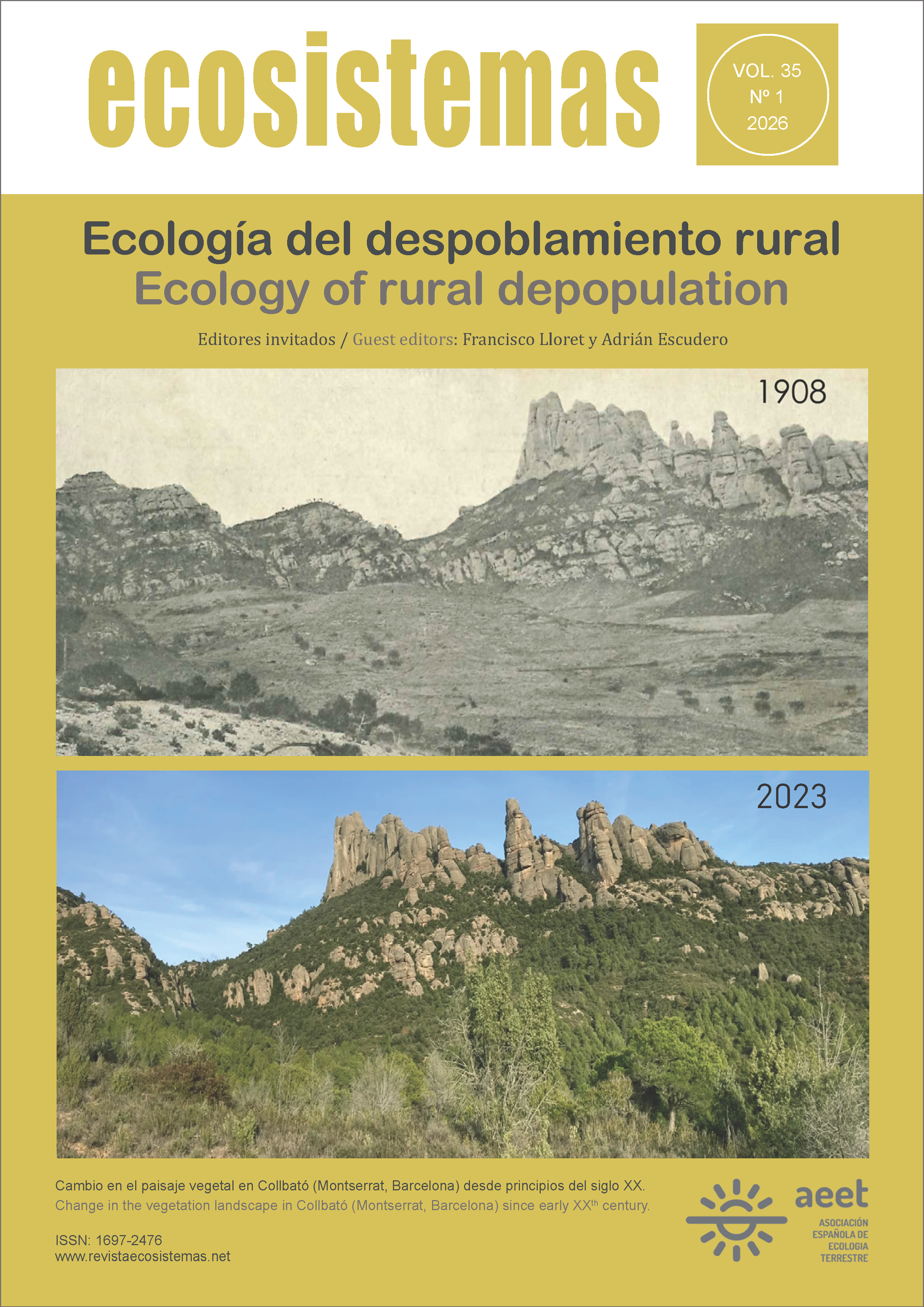
Main Article Content
Abstract
The Common Agricultural Policy (CAP) largely determines land use and has a great impact on biodiversity and human population distribution in Europe. Despite policy changes aimed at strengthening its environmental and social objectives, there is scientific evidence that these objectives are not being met. The lack of systematic and interdisciplinary evaluation of CAP’s achievements, through robust experimental designs, may be one of the reasons for this failure, as evaluations (never official) have been aimed at assessing the improvement in competitiveness and the export capacity of the different productive sectors. This situation has changed radically in the current 2023-2027 period, as it is mandatory to establish explicit environmental and social objectives and assess their achievement. We review relevant works that show results on both the environmental and socioeconomic impact of the CAP in rural areas, with particular emphasis on its ecological implications and its impact on rural depopulation. We also present the AGRIAMBIO (CSIC) Interdisciplinary Thematic Platform (PTI), a multidisciplinary group tasked with providing scientific advice and supporting the Spanish Ministry of Agriculture in the evaluation and monitoring of the environmental and social objectives of the current CAP Strategic Plan in Spain. Finally, from a comprehensive perspective, we highlight the strengths and weaknesses of the CAP in maintaining agricultural practices that ensure the viability of European agriculture as a model for sustainable land use that is ecologically viable and socially fair.
Downloads
Article Details

This work is licensed under a Creative Commons Attribution-NonCommercial 4.0 International License.
Accepted 2025-11-03
Published 2026-01-28