ecosistemas
ISSN 1697-2473
Open access / CC BY-NC 4.0
© 2026 The authors [ECOSISTEMAS is not responsible for the misuse of copyrighted material] / © 2026 Los autores [ECOSISTEMAS no se hace responsable del uso indebido de material sujeto a derecho de autor]
Ecosistemas 35(3): 3266 [September - December / septiembre - diciembre, 2026]: https://doi.org/10.7818/ECOS.3266
Associate editor / Editor asociada: Ignasi Bartomeus
NOTE / NOTA
ECOFLOR 2026 Tortosa: Expanding horizons in plant-pollinator systems research
Carlos Hernández-Castellano1,*
, Jakub Štenc2,3,4
, Marina Aguilar5
, Júlia Batlle-Benaiges5
, Júlia Coromina5
, Nil Guerrero5
, Alice Casiraghi6
, Jordi
Margalef-Marrasé7
, Néstor Pérez-Méndez8 ![]()
(1) Department of Ecology, Faculty of Environmental Sciences, Czech University of Life Sciences Prague, Kamýcká 129, Praha – Suchdol, 165 00, Czech Republic.
(2) Department of Botany, Faculty of Science, Charles University, Benátská 2, CZ-128 41 Prague, Czech Republic.
(3) Department of Zoology, Faculty of Science, Charles University, Viničná 7, CZ-128 41 Prague, Czech Republic.
(4) CREAF, Centre for Ecological Research and Forestry Applications, 08193, Bellaterra, Spain.
(5) Wildlife Ecology & Health (WE&H), Servei d’Ecopatologia de Fauna Salvatge (SEFaS), Universitat Autònoma de Barcelona, Cerdanyola del Vallès, Spain.
(6) Instituto Valenciano de Investigaciones Agrarias (IVIA). Centro de Protección Vegetal y Biotecnología. Carretera CV-315, Km 10.7, 43113. Moncada, Valencia, Spain.
(7) Centre de Ciència i Tecnologia Forestal de Catalunya (CTFC), 25280, Solsona, Spain.
(8) IRTA, Marine and Continental Waters Program, Centre de La Ràpita, La Ràpita, Catalonia, Spain.
* Autor de correspondencia / Corresponding author: Carlos Hernández-Castellano [hernandez_castellano@fzp.czu.cz]
|
> Recibido / Received: 30/04/2026 – Aceptado / Accepted: 27/07/2026 |
Cómo citar / How to cite: Hernández-Castellano, C., Štenc, J., Aguilar, M., Batlle-Benaiges, J., Coromina, J., Guerrero, N., … Pérez-Méndez, N. 2026. ECOFLOR 2026 Tortosa: Expanding horizons in plant-pollinator systems research. Ecosistemas 35(3): 3266. https://doi.org/10.7818/ECOS.3266
ECOFLOR is a working group of the Spanish Association of Terrestrial Ecology (AEET) focused on the ecology and evolution of flowers. It organizes an annual meeting where researchers present their ongoing projects and studies. In recent years, ECOFLOR has expanded its reach, achieving an international dimension and welcoming contributions from researchers worldwide.
The 23rd Annual Meeting was organized by the Wildlife Pollinators group, a research group of the Wildlife Ecology and Health Lab (https://weh.cat/), based in the Veterinary Faculty of the Autonomous University of Barcelona (UAB). Additional researchers from different institutions (IRTA, CTFC, CREAF, IVIA) were actively involved in the organisation. The meeting was held in the city of Tortosa during 11-14 February (Fig. 1) and gathered 105 participants from eight countries (mostly Spain, Italy, and the Czech Republic), including Brazil.
The goals of this year were 1) to consolidate ECOFLOR as an international reference congress for advancing research in floral ecology and evolution; and 2) to grow and expand the research horizons of the ECOFLOR scientific community.
The reader can find all the details of the congress, including the programme and the abstract book, either in the official webpage (https://pollination-ecology-group.github.io/ECOFLOR2026/) or asking the corresponding author.
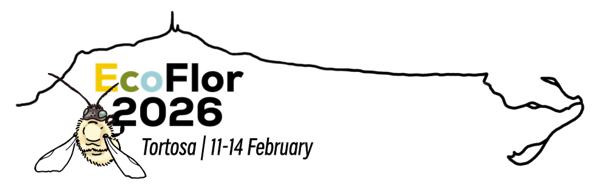
Figure 1. Logo of the ECOFLOR 23rd Annual Meeting. Male of Eucera nigrilabris, with the landscape representing the Ports and the Delta Natural Parks.
Figura 1. Logotipo de la 23ª edición del encuentro anual ECOFLOR. Macho de Eurcera nigrilabris, con línea de fondo que representa el paisaje de los Parques Naturales dels Ports y del Delta.
Workshops: Cavity-nesting bees and Nature Restoration Regulation
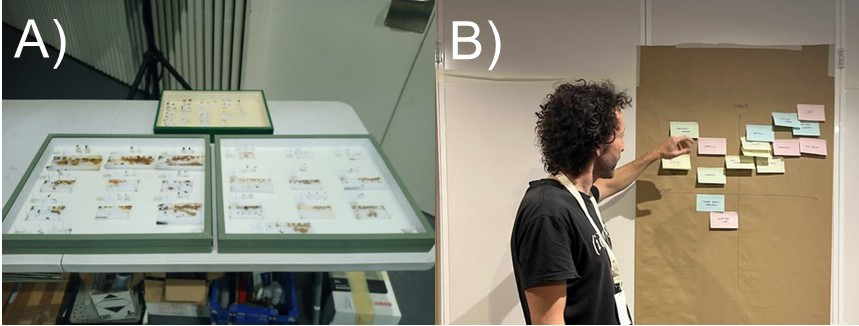
The workshop “Nesting traps for cavity-nesting bees and wasps in ecological studies: biology, ecology, materials and methods” provided an overview of the basic biology and ecology of cavity-nesting bees and wasps. Participants received practical recommendations on the selection of materials and the installation of nesting traps to ensure effective sampling and methodological replicability in ecological studies. The practical exercise consisted of examining and analyzing real nest samples (Fig. 2A). This methodology is widespread in research centres of Central Europe, especially in Germany. We hope that many research groups of the ECOFLOR community join this sampling method, which will allow us to gather multiple types of information (population sizes, community composition, host-parasitoid interactions, ecological networks) to answer both fundamental and applied (e.g. pollination, biological control) questions. Besides, its potential for pollinator monitoring should be assessed.
The workshop “Perspectives in plant-pollinator systems research in the new era of Nature Restoration” presented the European Nature Restoration Regulation, focusing on its overall goals as well as in its specific restoration targets, which include the recovery of pollinator populations. The workshop consisted in an open discussion, which highlighted that the Regulation is legally binding, since states must develop National Restoration Plans and launch EU Pollinator Monitoring Schemes by 2027. The main activity of the workshop was a collaborative exercise in which participants proposed specific actions to be addressed, which were classified into Monitoring, Restoration practices, Regulations, and Awareness, and classified according to its potential impact on conservation and its predicted economic/social cost, in order to establish research and management priorities (Fig. 2B). This information will be further developed among the assistants and organized into a Perspectives manuscript.
Figure 2. A) Entomological collections containing specimens (top) and nests (bottom) of cavity-nesting bees and wasps. B) The attendees of the Nature Restoration Regulation workshop classified their proposed actions in the impact and cost axis.
Figura 2. A) Colecciones entomológicas que contienen especímenes (arriba) y nidos (abajo) de abejas y avispas que anidan en cavidades. B) Los asistentes al taller sobre el Reglamento de Restauración de la Naturaleza clasificaron las acciones propuestas en función del impacto y el coste.
Opening lecture and plenary talks: pollinator monitoring, bee health, and wildfires
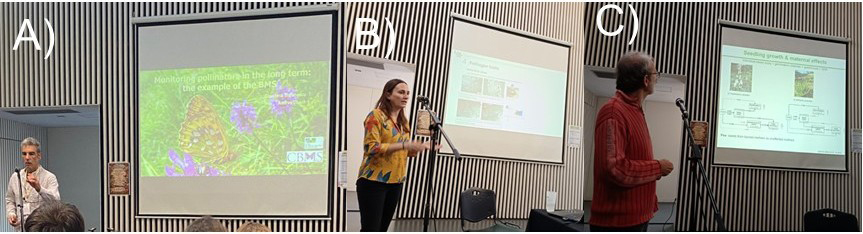
Dr. Constantí Stefanescu (Museu de Ciències Naturals de Granollers) gave the opening lecture “Monitoring pollinators in the long term: the example of butterflies and the European Butterfly Monitoring Schemes” (Fig. 3A). Long-term butterfly monitoring was presented as a powerful tool for assessing pollinator responses to global change. Butterfly Monitoring Schemes (BMS), often supported by citizen science, provide standardized, large-scale and long-term datasets (van Swaay et al., 2008). Using the Catalan Butterfly Monitoring Scheme (CBMS; https://www.catalanbms.org/) as an example, Stefanescu highlighted the value of more than three decades of data for analysing biodiversity trends in Mediterranean ecosystems. Results show marked declines in butterfly populations, especially habitat specialists, with around 70% of Mediterranean species showing negative trends (Melero et al., 2016). Long-term datasets have also revealed clear climate change impacts, including earlier flight periods as responses to warming and drought (Stefanescu et al., 2003). These findings confirm butterflies as valuable bioindicators of environmental change and highlight the importance of maintaining long-term monitoring programmes to support conservation and habitat management.
The first plenary lecture, “Flowers as Hotspots of Pesticide and Pathogen Exposure for Bees” was presented by Prof. Cristina Botías (Universidad de Alcalá de Henares) (Fig. 3B). Flowers were presented as key hotspots where pollinators are exposed simultaneously to food resources, pesticides and pathogens, making them central to understanding bee health and population decline. The lecture highlighted that not all flowers are equally safe for pollinators (Alger et al., 2019; Pinilla-Gallego et al., 2022), and that wildflowers can also contain neonicotinoid residues (Botías et al., 2015; David et al., 2016). The most important implication is that pollinator decline is driven by multiple interacting stressors, so it cannot be explained by single factors alone (Botías et al., 2021). Effective conservation therefore requires integrated management that reduces pesticide contamination, considers disease transmission dynamics and promotes habitat heterogeneity and high floral diversity to support bee nutrition.
Prof. Juli G. Pausas (CIDE, CSIC) presented the second plenary lecture, “Fire and plant reproduction” (Fig. 3C). Fire was presented as an inherent feature of a highly flammable planet, influencing all components of the Earth system, where plants both shape fire regimes and are in turn shaped by them (Pausas and Keeley, 2009). Fire was highlighted as a mechanism that creates reproductive opportunities through stimulated and synchronized flowering, generating short windows of reduced competition that enhance recruitment success (Gegunde et al., 2026). In addition, fire can reduce antagonistic interactions such as herbivory and seed predation, increasing fruit production and seed viability (García et al., 2016). The talk also placed emphasis on fire-mediated seed ecology, including germination responses triggered by heat and smoke and the importance of persistent soil seed banks. The main implication is that many plant species not only possess traits that allow them to survive fires but also benefit from them through a wide range of mechanisms. These mechanisms vary among species and across life stages, involving interactions between resource availability, biotic factors, maternal effects and natural selection. Therefore, understanding plant responses to fire requires an integrative approach, reinforcing that fire is far more than a simple disturbance shaping community structure.
Figure 3. A) Constantí Stefanescu giving the opening lecture of the congress about pollinator monitoring. B) Cristina Botías giving the first plenary talk about bee health. C) Juli Pausas giving the second plenary talk about wildfires.
Figura 3. A) Constantí Stefanescu impartiendo la conferencia inaugural del congreso sobre el seguimiento de los polinizadores. B) Cristina Botías impartiendo la primera ponencia plenaria sobre la salud de las abejas. C) Juli Pausas impartiendo la segunda ponencia plenaria sobre los incendios forestales.
Oral and Poster Contributions
During the meeting, attendees shared their latest findings through 44 oral presentations organized into 9 thematic sessions, and 34 poster presentations across 2 sessions. Oral and poster contribution summaries can be found in the book of abstracts (Hernández-Castellano et al., 2026).
Oral contribution sessions
The session on Floral Evolution, Breeding Systems, and Reproductive success explored the evolutionary processes shaping floral diversity, reproductive strategies, breeding systems, and the genetic and ecological drivers of plant reproductive success. Closely related, the Traits, Plasticity & Signals session focused on the functional significance and environmental plasticity of floral traits, including floral economics, responses to abiotic conditions, and the influence of floral signals on pollinator behaviour.
The Community Ecology, Networks & Niche Partitioning session examined pollination niches, ecological networks, biodiversity patterns, and the effects of habitat characteristics, land use, invasive species, and anthropogenic disturbance on plant–pollinator communities. Broader discussions also addressed methodological challenges in interpreting pollinator population trends and revisited the ecological role of historically understudied pollinator groups.
Research presented in Alpine & Montane Ecology focused on plant–pollinator interactions across high-elevation ecosystems, comparing tropical and temperate mountain environments, assessing elevational gradients, reproductive strategies, pollinator communities, and methodological approaches for studying these systems.
The Global Change: Climate, Pollution & Long-term Trends session addressed multiple drivers of global change, including climate warming, extreme weather events, atmospheric pollution, and long-term biodiversity change. Presentations combined experimental studies, historical collections, and long-term monitoring datasets to investigate ecological responses across temporal and spatial scales.
The Applied Pollination Ecology session highlighted the importance of wild pollinators in agricultural systems, focusing on habitat management, pollination deficits, and strategies to enhance ecosystem services in crop production. Complementing this applied perspective, the Urban Pollination Ecology session explored pollinator responses to urban environments, considering both ecological adaptations and the role of urban green spaces in conservation and public engagement.
The Citizen Science session demonstrated how digital tools and public participation can improve pollinator monitoring, species identification, and biodiversity data collection, illustrating the growing contribution of citizen-generated data to ecological research.
Finally, the Pollination, Herbivory, Microbiota, and Pathogens session examined the complex biotic interactions influencing plant and pollinator health, including microbial communities, pathogen transmission, herbivory, and their combined effects on floral traits, pollinator physiology, and ecological interactions.
Poster contribution sessions
The session on Pollinator Ecology, Networks, Health & Conservation addressed the ecology, conservation, and health of pollinators across a wide range of ecosystems and spatial scales. Contributions explored plant–pollinator networks in natural, managed, urban, and restored habitats, as well as the effects of environmental change, post-fire ecological succession, grazing by large wild herbivores, rewilding, and renewable energy infrastructures on pollinator communities and interactions. Advances in monitoring technologies, including automated identification systems, were presented alongside studies examining functional diversity, community assembly, and pollinator responses to habitat management. Pollinator health was another major theme, with contributions investigating pathogen dynamics, host–parasite interactions, and innovative approaches for controlling honeybee pests. Together, the studies provided new insights into the mechanisms shaping pollinator diversity, ecosystem functioning, and the development of effective conservation and management strategies.
The session on Plant Traits, Floral Biology, & Pollination Mechanisms focused on the mechanisms underlying plant–pollinator interactions, spanning floral biology, reproductive strategies, evolutionary processes, conservation genetics, and pollination ecology. Contributions addressed topics such as mating systems and floral adaptations promoting outcrossing, the genetic basis of phenotypic variation, the influence of environmental factors on flower development, and the evolutionary consequences of plant–pollinator relationships. Several studies explored innovative approaches for assessing and monitoring genetic diversity in threatened plant species, while others examined pollen transfer dynamics, pollination efficiency, and the effects of climate change on specialized interactions. Additional contributions considered long-term changes in plant and pollinator communities, historical baselines for biodiversity loss, and the implications of terminology and standardized methodologies for pollinator conservation and research. The session also highlighted links between pollination services and societal challenges, including food security and biodiversity conservation.
Best student oral and poster contributions
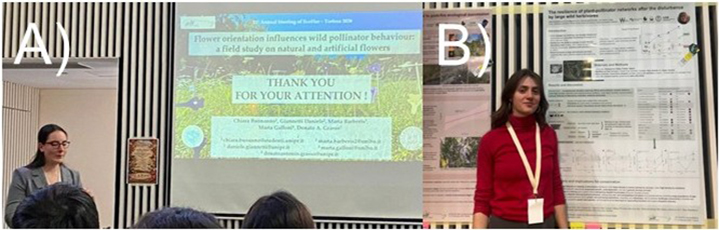
The best student oral presentation contribution was entitled “Flower orientation influences wild pollinator behaviour: a field study on natural and artificial flowers”, by Chiara Buonnano (University of Parma). She investigated how changes in the orientation of flowers with a bilateral symmetry affect pollinator attraction and behaviour. Two complementary approaches were used, one with real flowers and the other with artificial flowers of Salvia Rosmarinus and Salvia farinacea. In both cases flowers were experimentally manipulated to alter their natural position. Results showed that insects significantly preferred yellow, horizontally oriented, and higher-positioned flowers. Experiments with real flowers revealed a strong preference for natural flower orientation. Manipulated flowers received fewer visits, and pollinators exhibited altered behavioural patterns depending on species-specific foraging strategies. Overall, results supported the hypothesis that flower orientation plays a key role in plant–pollinator interactions and reflects evolutionary adaptations. Moreover, this study emphasized the importance of field-based experiments in capturing the complexity of pollinator behaviour in natural environments.
The best student poster contribution, entitled “The resilience of plant-pollinator networks after the disturbance by large wild herbivores” was presented by Júlia Coromina (Universitat Autònoma de Barcelona). Using hectare-scale enclosures monitored between 2021 and 2024, network components under different red deer overabundant scenarios were compared to pre-disturbance levels to evaluate resilience. The results showed that system resilience depended on the intensity of disturbance and that resilience varied across network components. Flowering plant species were differently affected depending on their palatability, and interactions involving the most affected plants were less resilient. Network modularity and robustness were resilient. Resilience under the hyper-density scenario was mainly reached by recovery, and under high-density scenario by resistance. The study uncovers that resilience in plant-pollinator networks is scale-dependent and that recovery is a gradual process, and highlights the importance of enhancing plant-pollinator network resilience by the reduction of overabundant deer populations, prioritizing non-palatable plants in restoration practices as well as protecting rare and strong interactions involving specialist species.
Figure 4. A) Chiara Buonnano, winner of the best student oral contribution. B) Júlia Coromina, winner of the best student poster contribution.
Figura 4. A) Chiara Buonnano, ganadora del premio a la mejor ponencia oral de estudiante. B) Júlia Coromina, ganadora del premio al mejor póster de estudiante.
Field trip: Wildfires and Ecological Restoration
The field trip was organized to experience, from a practical perspective, some of the new research horizons highlighted in the congress. Specifically, we planned to visit a protected natural area affected by a recent wildfire, and another in which ecological restoration of natural habitats are taking place. Unfortunately, the extreme windy weather impeded us from conducting the fieldtrip. However, here we provide some cues on the contents.
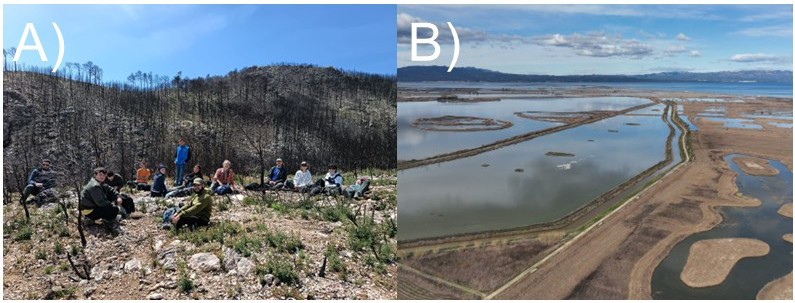
The Ports Natural Park is a protected area covering approximately 350 km². It represents the easternmost extension of the Iberian System, consisting of a predominantly limestone mountain range reaching elevations of up to 1,400 meters above sea level. The dominant vegetation is typical of Mediterranean shrub and forest communities, mainly composed of Aleppo pine (Pinus halepensis) and holm oak (Quercus ilex), largely resulting from the abandonment of traditional agriculture during the 20th century. Shrublands and grasslands also occur in areas where land abandonment has been more recent or where wildfires have taken place, such as the Alfara de Carles fire (1993, 568.5 ha), Horta de Sant Joan fire (2009, 1,140 ha), or the Paüls fire (2025, 3,321 ha).
The visit would have been conducted in the area affected by the Paüls wildfire (Fig. 5A), the most recent fire to impact the Els Ports Natural Park. During the visit, we would have discussed the importance of maintaining natural fire regimes, or even restoring fire as an ecological process in natural areas, in order to promote landscape heterogeneity. Over recent decades, fire suppression has increasingly pushed ecosystems toward a scenario of habitat homogenization. This situation is similar to that observed in many other Mediterranean regions around the world and may compromise species that depend on open habitats to survive, including grassland plants and animals associated with open environments, such as pollinators, birds, and small mammals.
The Ebro Delta Natural Park (Fig. 5B) is one of the most important and biodiverse wetlands in the Western Mediterranean, covering around 320 km2 of rice fields, lagoons, salt marshes and sand dune systems. The Ebro Delta hosts a highly diverse community of waterbirds, including important populations of some iconic species such as the Audouin gull. During the second part of the visit, we planned to visit the “Bombita” state, a former 500-ha rice farm that is being rewilded to promote biodiversity and face climate change impacts on the territory. Together with the environmental managers, we would have had the opportunity to discuss: (i) the effects of climate change on sensitive environments such as the Ebro Delta, (ii) potential strategies and NbS to reduce these impacts, and (iii) the socio-environmental challenges involved in carrying out this type of restoration.
Figure 5. A) Area affected by the Paüls wildfire, in the Els Ports Natural Park. Juli Pausas Lab and the Wildlife Pollinators Group in a field trip in March 2026. B) The “Bombita” state within the Ebro Delta Natural Park. Picture by Ferran Valero.
Figura 5. A) Zona afectada por el incendio forestal de Paüls, en el Parque Natural de Els Ports. El Laboratorio Juli Pausas y el Grupo de Polinizadores Silvestres en una excursión realizada en marzo de 2026. B) La «Bombita», dentro del Parque Natural del Delta del Ebro. Fotografía de Ferran Valero.
Ecological activism and Social interactions
As in any ECOFLOR meeting, there was room for ecological activism. The congress dates coincided with the International Day of Women in Science (11th February), and we are happy to inform you that 65% of the attendees were women. Research networking was fostered by an “open-to-work” wall, in which researchers and students post several job offers and availability to join labs.
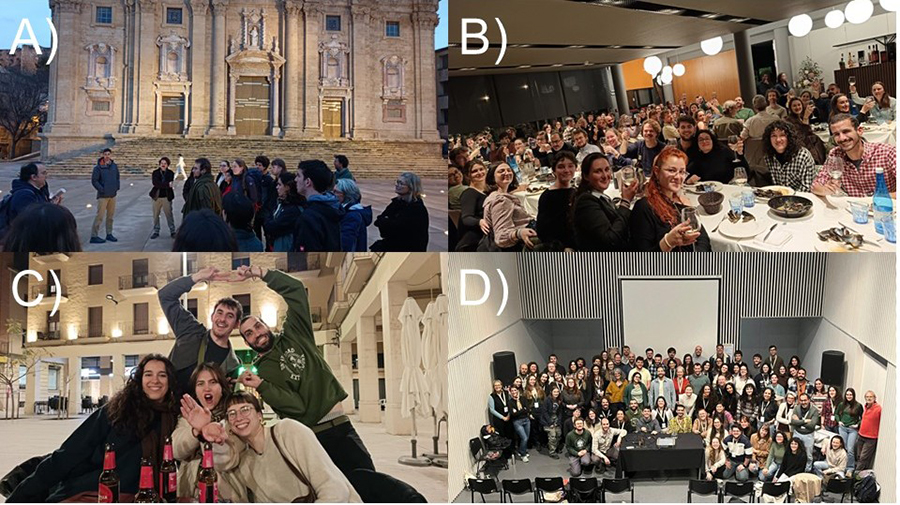
Also, as usual, there was plenty of time for social interactions. The social programme included a guided free tour to the historical city of Tortosa (Fig. 6A) and an official dinner in a traditional restaurant (Fig. 6B). The organizing committee (Fig. 6C) thanks all the participants (Fig. 6D) for coming to Tortosa and for making the 23rd ECOFLOR Annual Meeting a high-level scientific event and a very nice human history. Paraphrasing Christopher McCandless in the book Into the Wild by Jon Krakauer, “Happiness (and science) is only real when shared”.
Figure 6. The attendees joined A) a free tour in the city of Tortosa and B) a social dinner in a traditional restaurant. C) The Wildlife Pollinators group, which organized the meeting. D) Group picture at the closing ceremony.
Figura 6. Los asistentes participaron en: A) una visita guiada gratuita por la ciudad de Tortosa y B) una cena social en un restaurante tradicional. C) El grupo «Wildlife Pollinators», organizador del encuentro. D) Foto de grupo en la ceremonia de clausura.
Financing, required permits, potential conflicts of interest and acknowledgments
We are in debt with Francesc Xavier Espuny Domingo (Xavi), the caretaker of the Centre Cívic Ferreries, the venue of the congress. He scheduled meticulously from the very beginning of the organization, provided us with anything necessary, prepared all the rooms, and joined actively all the tasks to assure everything was perfect. We really appreciate his sympathy and friendship.
We thank the following organizations for funding: Asociación Española de Ecología Terrestre, Parc Natural dels Ports, Parc Natural del Delta, Ajuntament de Tortosa, Diputació de Tarragona.
As we did not receive any funding to cover the costs of coffee and wine breaks, we thank all the attendees who fed the ceramic piglets with coins (and even some bills!).
Authors' Contribution
All authors: Conceptualization, Writing – original draft, Writing – review & editing.
References
Alger, S. A., Burnham, P. A., & Brody, A. K. (2019). Flowers as viral hot spots: Honey bees (Apis mellifera) unevenly deposit viruses across plant species. PLoS ONE, 14(9), e0221800. https://doi.org/10.1371/journal.pone.0221800
Botías, C., David, A., Horwood, J., Abdul-Sada, A., Nicholls, E., Hill, E., & Goulson, D. (2015). Neonicotinoid residues in wildflowers, a potential route of chronic exposure for bees. Environmental Science & Technology, 49(21), 12731–12740. https://doi.org/10.1021/acs.est.5b03459
Botías, C., Martín-Hernández, R., Barrios, L., Meana, A., & Higes, M. (2021). Multiple stressors interact to impair the performance of bumblebees. Journal of Animal Ecology, 90(2), 415–431. https://doi.org/10.1111/1365-2656.13375
David, A., Botías, C., Abdul-Sada, A., Goulson, D., Hill, E. M., & Osborne, J. L. (2016). Widespread contamination of wildflower and bee-collected pollen with complex mixtures of neonicotinoids and fungicides commonly applied to crops. Environment International, 88, 169–178. https://doi.org/10.1016/j.envint.2015.12.011
García, Y., Castellanos, M. C. & Pausas, J. G. (2016). Fires can benefit plants by disrupting antagonistic interactions. Oecologia 182, 1165–1173. https://doi.org/10.1007/s00442-016-3733-z
Gegunde, J., Castellanos, M. C., & Pausas, J. G. (2026). Fire-stimulated flowering enhances multiple plant fitness components. Annals of Botany, mcag048. https://doi.org/10.1093/aob/mcag048
Hernández-Castellano, C., et al. (Eds.). Proceedings of the XXIII Meeting of the Floral Ecology working group - Ecoflor 2026. Tortosa, Spain. Available at: https://www.aeet.org/mm/file/Ecoflor_2026_Book_of_abstracts_baja.pdf
Melero, Y., Stefanescu, C., & Pino, J. (2016). General declines in Mediterranean butterflies over the last two decades are modulated by species traits. Biological Conservation, 201, 336–342. https://doi.org/10.1016/j.biocon.2016.07.029
Pausas, J. G., & Keeley, J. E. (2009). A burning story: the role of fire in the history of life. BioScience, 59(7), 593-601. https://doi.org/10.1525/bio.2009.59.7.10
Pinilla-Gallego, M. S., Irvin, N. A., Adler, L. S., & McArt, S. H. (2022). Floral shape predicts bee–parasite transmission potential. Proceedings of the Royal Society B, 289(1976), 20220278. https://doi.org/10.1098/rspb.2022.0278
Stefanescu, C., Peñuelas, J., & Filella, I. (2003). Effects of climatic change on the phenology of butterflies in the northwest Mediterranean Basin. Global Change Biology, 9(10), 1494–1506. https://doi.org/10.1046/j.1365-2486.2003.00682.x
van Swaay, C. A. M., Nowicki, P., Settele, J., & van Strien, A. J. (2008). Butterfly monitoring in Europe: Methods, applications and perspectives. Biodiversity and Conservation, 17, 3455–3469. https://doi.org/10.1007/s10531-008-9491-4