ecosistemas
ISSN 1697-2473
Open access / CC BY-NC 4.0
© 2026 The authors [ECOSISTEMAS is not responsible for the misuse of copyrighted material] / © 2026 Los autores [ECOSISTEMAS no se hace responsable del uso indebido de material sujeto a derecho de autor]
Ecosistemas 35(3): 3191 [September - December / septiembre - diciembre, 2026]: https://doi.org/10.7818/ECOS.3191
Associate editor / Editor asociada: Gissell Lacerot
REVIEW ARTICLE / ARTÍCULO DE REVISIÓN
The Albuferas de Adra in crisis: a comprehensive review demanding urgent conservation action
Enrique Moreno-Ostos1,*
, Presentación
Carrillo2
, Antonio J. Castro3,4
, Inmaculada de
Vicente2
, Mónica Expósito-Granados3,4,5
, Juan Gisbert-Gallego6,7
, Juan Manuel Medina-Sánchez2
, José Luis Molina-Pardo3,5,7
, Mariano Paracuellos5,8
, Juan Miguel Requena Mullor3,4
, Juan Rubio-Ríos3,4,9
, Miriam Ruiz- Nieto1
, Mauricio Santa7, Fernando Sola6
, Ángela Vallejos6
,
Enrique Villanueva10, Paula Warren-Jiménez1
, J. Jesús Casas3,4 ![]()
(1) Marine Ecology and Limnology Research Group (GEML). Dpt. Ecology and Geology. University of Málaga, Spain.
(2) Department of Ecology and University Institute of Water Research, University of Granada, Spain.
(3) Department of Biology and Geology, University of Almería, Spain.
(4) Andalusian Centre for the Global Change – Hermelindo Castro (ENGLOBA), Almería, Spain.
(5) Lorenzo García Banding Station, Adra, Almería, Spain.
(6) Water Resources and Environmental Geology Research Group (RHyGA). Dpt. Biology and Geology. University of Almería, Spain.
(7) Center for Research on Scientific Collections of the University of Almería (CECOUAL), Almería, Spain.
(8) Evolutionary and Behavioral Ecology Research Group, University of Granada, Spain.
(9) Department of Biology and Geology, Physics and Inorganic Chemistry, University King Juan Carlos, Madrid, Spain.
(10) Institute of Almerian Studies, Almería, Spain.
* Corresponding author / Autor para correspondencia: E. Moreno-Ostos [quique@uma.es]
|
> Received / Recibido: 29/01/2026 – Accepted / Aceptado: 06/07/2026 |
How to cite / Cómo citar: Moreno-Ostos, E., Carrillo, P., Castro, A. J., de Vicente, I., Expósito-Granados, M., Gisbert-Gallego, J., … Casas, J. J. (2026). The Albuferas de Adra in crisis: a comprehensive review demanding urgent conservation action. Ecosistemas 35(3): 3191. https://doi.org/10.7818/ECOS.3191
|
The Albuferas de Adra in crisis: a comprehensive review demanding urgent conservation action Abstract: The Albuferas de Adra constitute one of the most ecologically significant wetlands in southern Spain. As a permanent lacustrine system within a semiarid Mediterranean environment, the site holds exceptional conservation value and is protected as a Natural Reserve, a Ramsar Wetland of International Importance, and a Natura 2000 Special Protection Area for Birds and Special Area of Conservation. Despite this extensive legal protection, the wetland is undergoing marked ecological deterioration driven by intensive agricultural activity in the surrounding watershed, habitat loss and fragmentation, and the proliferation of invasive species. These pressures have resulted in a sustained decline in water quality, characterized by increasing salinity and nutrient enrichment, with direct implications for ecosystem integrity and biodiversity. Ecological responses to these stressors are substantial. Native reed beds (Phragmites australis) are being progressively replaced by unvegetated zones and halophytic vegetation. Significant population declines have been documented in six waterbird species, most notably the globally endangered Oxyura leucocephala, a key species underpinning the site’s international relevance. The marsh associated bird assemblage has also experienced structural simplification, with ten species lost or reduced, indicating advanced habitat degradation. The endemic and globally threatened fish Aphanius iberus has disappeared or sharply declined in recent years, while the regionally endangered amphibian Hyla meridionalis shows signs of probable decline. Drawing on public datasets and authors´ long term research, this review demonstrates that cumulative anthropogenic pressures are compromising the ecological functionality and medium-term viability of the Albuferas de Adra. Additionally, a persistent disconnect between the wetland and local society has limited its visibility in governance processes. Effective conservation and restoration actions—particularly improved agricultural management and control of invasive species—are urgently required. Nature based and hydrological strategies, informed by experiences in Doñana and the Mar Menor, could enhance ecosystem resilience and support compliance with the EU Nature Restoration Law. Keywords: Albuferas de Adra; anthropogenic pressures; coastal wetlands; conservation and restoration; ecological degradation; threatened biodiversity Las Albuferas de Adra en crisis: una revisión integral que demanda acciones urgentes de conservación Resumen: Las Albuferas de Adra constituyen uno de los humedales de mayor relevancia ecológica del sur de España. Como sistema lacustre permanente en un contexto mediterráneo semiárido, el enclave presenta un valor de conservación excepcional y se encuentra protegido como Reserva Natural, Humedal de Importancia Internacional (Ramsar), Zona de Especial Protección para las Aves y Zona de Especial Conservación dentro de la Red Natura 2000. No obstante, pese a este sólido marco jurídico, el humedal experimenta un deterioro ecológico acusado, impulsado por la intensa actividad agrícola en su cuenca, la pérdida y fragmentación del hábitat, y la expansión de especies invasoras. Estas presiones han generado un descenso sostenido de la calidad del agua, reflejado en incrementos significativos de salinidad y concentración de nutrientes, con consecuencias directas para la integridad del ecosistema y su biodiversidad. Las respuestas ecológicas observadas son relevantes. Los carrizales nativos (Phragmites australis) están siendo sustituidos progresivamente por áreas desprovistas de vegetación u ocupadas por comunidades halófitas. Se han registrado descensos poblacionales significativos en seis especies de aves acuáticas, destacando la disminución de la globalmente amenazada Oxyura leucocephala, especie clave para el reconocimiento internacional del humedal. La comunidad de aves asociada a la vegetación palustre muestra además una simplificación estructural, con diez especies desaparecidas o en declive, indicativa de una degradación avanzada del hábitat. El pez endémico y globalmente amenazado Aphanius iberus ha desaparecido o sufrido un marcado retroceso en los últimos años, mientras que el anfibio Hyla meridionalis, catalogado como amenazado a escala regional, presenta signos de probable declive. A partir de bases de datos públicas y de la prolongada trayectoria investigadora de los/as autores/as en este humedal, esta revisión demuestra que las presiones antrópicas acumuladas están comprometiendo de manera crítica la funcionalidad ecológica y la viabilidad a medio plazo de las Albuferas de Adra. Paralelamente, la persistente desconexión entre el humedal y la sociedad local ha reducido su presencia en los procesos de gobernanza y en la toma de decisiones territoriales. En este contexto, resulta imprescindible la implementación urgente de medidas eficaces de conservación y restauración, con especial énfasis en la transformación de las prácticas agrícolas y en el control de especies invasoras dentro de la cuenca. Asimismo, la adopción de estrategias hidrológicas y soluciones basadas en la naturaleza, informadas por experiencias previas en sistemas como Doñana y el Mar Menor, podría fortalecer la resiliencia del ecosistema y contribuir al cumplimiento de los objetivos establecidos por la Ley de Restauración de la Naturaleza de la Unión Europea. Palabras clave: Albuferas de Adra; biodiversidad amenazada; conservación y restauración; degradación ecológica; humedales costeros; presiones antrópicas |
Context and authors´ aim
The Albuferas de Adra are one of the most relevant wetlands in southern Spain (Paracuellos, 2002; Cruz-Pizarro et al., 2003; de Vicente et al. 2006a; Moreno-Ostos et al., 2008). This ecosystem constitutes a unique environment as a wetland in a semi-arid region, with a significant ecological value as biodiversity hotspots (Paracuellos et al., 2019) and provider of essential ecosystem services. Due to its exceptional environmental value, the Albuferas de Adra wetland was officially included in the Inventory of Natural Protected Areas of Andalusia as a Natural Reserve from 1989 (Government of Andalusia, 1989). Since 1994, this wetland has been included in the list of the Ramsar Convention of Wetlands of International Importance (Council of Ministers, 1994). It is also part of the Natura 2000 Network, recognized as a Special Area of Conservation (CMAOT, 2015) and Special Protection Area for Birds (CMA, 2001). Populations of globally endangered species, such as Oxyura leucocephala (IUCN, s.d.), overwinter and breed in these lagoons, forming here in the past one of its most relevant populations in Europe (Paracuellos, 2002).
Despite its ecological importance, the Albuferas de Adra face significant anthropogenic threats (e.g. CMAOT, 2015). The aim of this review article is to document and raise awareness of the accelerated ecological degradation affecting the Albuferas de Adra protected wetland. We seek to draw the attention of the scientific community, nature conservation organizations, and, most urgently, the competent environmental authorities, urging them to implement immediate and effective conservation and restoration measures. Without decisive actions, the Albuferas de Adra risk becoming a failed Natural Reserve, despite its legal protection and ecological significance.
This comprehensive review work is the result of a collaborative effort among the three Mediterranean Andalusian public universities (Málaga, Almería, and Granada) and a local citizen science-based bird banding station (Lorenzo García Banding Station), whose research teams share deep long-term scientific knowledge on the wetland and concern over its critical conditions. Their joint investigations have provided the scientific foundation necessary to understand the drivers of degradation and to support urgent conservation interventions.
Study area
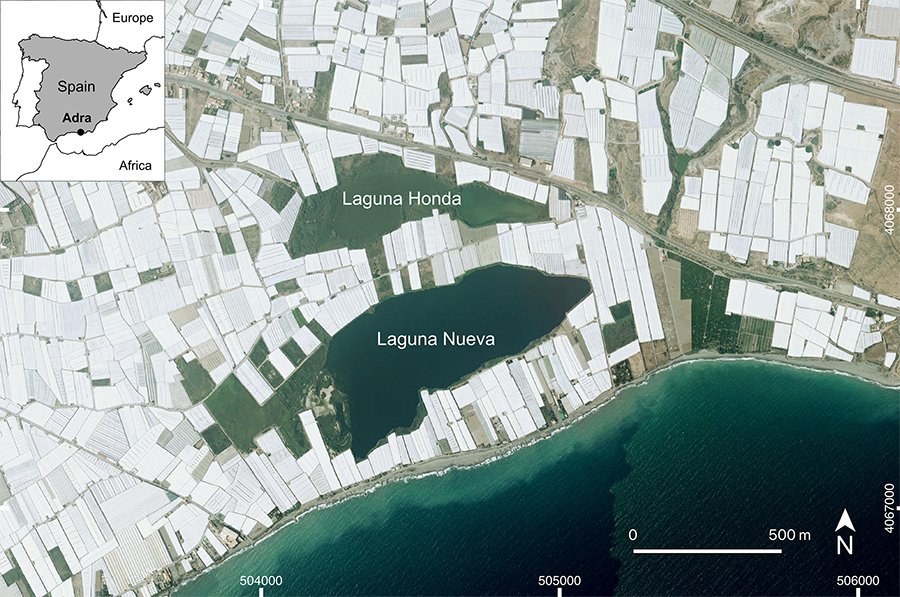
The Albuferas de Adra constitute a permanent and brackish wetland located in the delta of the Adra river (Almería, southeastern Iberian Peninsula) (Fig. 1). Climatically, this area experiences a Mediterranean thermoxeric regime (semi-arid Mediterranean), with an average annual temperature around 18ºC and scarce, highly torrential precipitation that rarely exceeds 200-250 mm annually. These dry conditions are further intensified by high solar radiation and strong, dry winds, positioning the region among the most arid and climatologically extreme coastal environments in Europe. Although the wetland is relatively recent (just over 1000 years old; Hoffmann, 1988), it has undergone a progressive evolution and profound transformation throughout the last centuries mainly provoked by human activity, being colonized since the 1980s-1990s by the now ubiquitous greenhouses (Paracuellos, 2006). While it once occupied a much larger area in the deltaic plain (i.e. 80.3 ha in 1957), the complex is now reduced by 27% to several more or less isolated marsh fragments (Paracuellos, 2008), with bodies of free water (35.5 ha) and helophytic vegetation (22.9 ha), where Laguna Honda (15.5 ha surface area and 3.2 m maximum depth) and Laguna Nueva (41.6 ha surface area and 3.8 m maximum depth) are the main lagoons. Despite its relatively small size, environmental and geographical factors shape and regulate the physical and ecological characteristics present in the wetland complex. A prominent feature of the marsh complex is that, despite their geographic proximity, both lagoons exhibit unique biogeochemical processes (de Vicente, 2004; de Vicente et al., 2006a, b). Specifically, Laguna Honda sustains high algal biomass through the rapid recycling of fine sediments and labile organic matter. On the other hand, Laguna Nueva limits nutrient turnover through macrophyte stabilization and the chemical sequestration of phosphorus onto calcium carbonate (CaCO3), a process driven by high Ca2+ levels that effectively locks nutrients in the sediment.
Another important feature is that the wetland constitutes a biodiversity hotspot, with at least 599 different taxa identified here, of which plants account for 28% of the species, vertebrates 39%, invertebrates 28%, and other organisms the remaining 5% (Paracuellos et al., 2019). The duck Oxyura leucocephala, the fish Aphanius iberus, and the amphibian Hyla meridionalis are some of its most relevant species, cataloged endangered on a global and/or local scale (IUCN, s.d.; Paracuellos et al., 2019, 2025). The importance of the Albuferas de Adra for O. leucocephala, listed as legally endangered in Andalusia (Government of Andalusia, 2012), lies in the fact that the wetland has supported one of its largest populations in all Spain and Europe for many years (Torres Esquivias, 2003). A. iberus, an endemic species of the Iberian Peninsula, present in the lagoons (Martínez Vidal and Castro, 1990), is also listed as legally endangered in Andalusia (Government of Andalusia, 2012). Finally, H. meridionalis, legally protected in Andalusia (Government of Andalusia, 2012), finds into the Adra wetland one of its last refugees with a viable population in the entire southeastern Iberian Peninsula, region where it is also considered endangered (Paracuellos et al., 2025).
Figure 1. Location of the Albuferas of Adra wetland complex, surrounded by intensive greenhouse agriculture. Image source: ESRI World Imagery.
Figura 1. Ubicación del humedal de las Albuferas de Adra, rodeando de agricultura intensiva bajo inveranderos. Fuente de la imagen: ESRI World Imagery.
Data and methods
To carry out this review, data on land use changes, hydrology, water quality, vegetation, and fauna on the wetland were used, obtained primarily from public databases as well as from the authors' long-term research and academic activities. Moreover, most of the scientific papers on this ecosystem consist of studies conducted by the authors, who represent the largest and most active research group working on Albuferas de Adra.
To review, quantify and map the principal land use change trajectories in the Albuferas de Adra watershed between 1956 and 2007, trajectory analysis was conducted using the tranUSE software (Requena-Mullor et al., 2015), a Java-based tool enabling spatial interpretation of user-defined land use transitions (Pérez-Ramírez et al., 2023). The analysis utilized high-resolution public vegetation and land use maps (1:25.000) from the public REDIAM (Environmental Information Network, Government of Andalusia) database, covering the years 1956, 1977, 1984, 1999, 2003, and 2007. Resulting trajectory maps include detailed classifications of agricultural zones, natural vegetation, urban development, and greenhouse infrastructure, supporting long-term monitoring. Watershed boundaries were delineated using official hydrological datasets from the Andalusian Regional Government and the Spanish Ministry for Ecological Transition. Validation and integration were supported by SIOSE land cover databases (2016, 2020, available online), enabling assessment of post-2007 land use persistence and evolution.
For hydrological change description, we have used historical hydrogeochemical data (Bayo Montoya, 2005; Rodríguez-Rodríguez et al., 2011) and electric conductivity (EC) and chloride and bromide ion concentrations data from annual academic in situ monitoring (University of Almería, 2010–present). Bromide and chloride behave conservatively in water and can be used as tracers to identify seawater intrusion.
Eutrophication dynamics in the wetland were evaluated using research data (including several previously published studies) from University of Granada and University of Almería, spanning from the mid-1980s to 2022. For 1997–2011, total phosphorus (TP) and chlorophyll-a (Chl-a) data were sourced from regional databases. From 2010 onward, University of Almería conducted an academic annual sampling campaign in Laguna Honda and Laguna Nueva, which provided annual Chl-a and TP measurements.
Reed bed coverage changes were quantified for the period 2004-2024 via planimetric analysis of public aerial imagery (Google Earth, s.d.; IGN, s.d.) and correlated with annual EC data using linear regression.
Regarding the fauna, temporal dynamics of waterbirds were assessed using public datasets from CSMA (2024). Data on marsh vegetation bird species were sourced from Paracuellos (2008), Paracuellos et al. (in press) and EALG (s.d.). Data on the endangered fish species A. iberus were extracted from official reports (2010–2022) and public spatial-temporal databases (CSMAEA, Government of Andalusia, 2023, unpublished data; Government of Andalusia, 2025, unpublished data). Finally, presence records of the amphibian species H. meridionalis were obtained from Paracuellos et al. (2022, 2025).
The decline of a protected wetland
Watershed changes
The arid and semi-arid ecosystems of Almería (SE Spain), continental Europe’s driest region, have undergone one of the most dramatic and significant land transformations in Europe (Castro et al., 2011; López-Rodríguez et al., 2015), with major economic and sociocultural consequences (Castro et al., 2019). The documented impacts on the ecosystems of this region over recent decades have not only increased their ecological vulnerability but also led to the loss of a unique component of European biodiversity (Castro et al., 2015; Quintas-Soriano et al., 2016; INE, 2014). This situation stems largely from two land use changes promoted by public spatial planning policies aimed at boosting the region’s socioeconomic development since the 1960s (Quintas-Soriano et al., 2016; Requena-Mullor et al., 2018): (1) the rapid transition to intensive greenhouse horticulture in coastal areas promoted by the National Institute for Rural Development and Colonization (Royal Legislative Decree 24/06/41), and (2) urban expansion linked to population growth resulting from the intensification of agriculture and mass tourism, driven by the Urban Planning Law of Andalusia (Law 7/2002). This period has, in fact, been described as “the Almerian miracle” (Quintas-Soriano et al. 2016, 2018), in reference to the transformation of Europe’s driest region into one of the most economically prosperous areas of Spain but, at the same time, one of the most transformed regions in the world due to the proliferation of greenhouse-based, water-intensive horticulture (Quintas-Soriano et al. 2016; Castro et al., 2019).
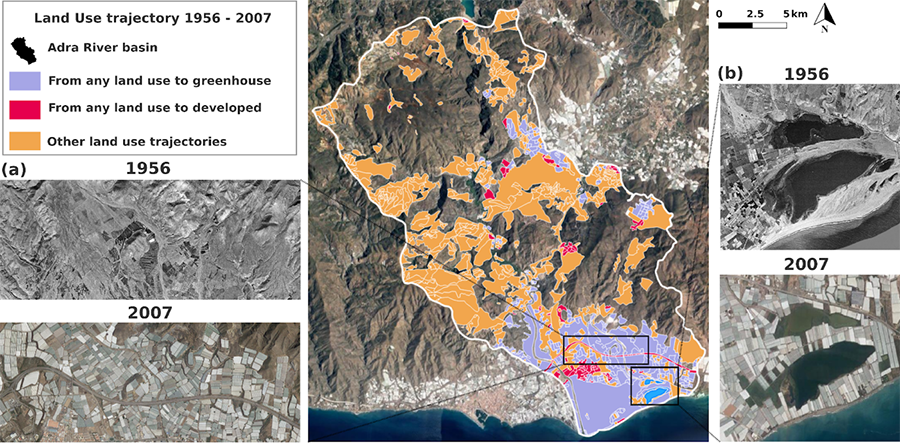
Our review of land-use dynamics reveals that greenhouse development and urban expansion were the most prominent transformations in the southern sector of the Albuferas de Adra watershed (Fig. 2). Between 1956 and 2007, 46% of the watershed area underwent land-use change, with 29% of the area converted to greenhouse agriculture and 4% to urban land and associated infrastructure. Greenhouse expansion occurred predominantly at the expense of Mediterranean shrubland and extensive dryland farming in the northwest of the lagoons. Notably, the Albuferas de Adra wetlands, which were free of greenhouses in 1956, became surrounded by intensive agricultural development within 50 years (see Paracuellos, 2006). By 2007, greenhouse and urban land covered 11.8% and 3.9% of the watershed, respectively. These proportions were similar in 2022 (12% and 4%), indicating persistent land-use pressures in the area.
Figure 2. Land use trajectories (1956 - 2007) in the Adra river basin. (a) Extensive transformation from natural shrubland and traditional agricultural systems (1956) to intensive greenhouse cultivation (2007) in the northwestern sector of the Albuferas de Adra. (b) Laguna Honda (north) and Laguna Nueva (south), initially free of greenhouse infrastructure in 1956, became fully encircled by greenhouses fifty years later. Land use trajectories were computed using tranUSE (Requena-Mullor et al., 2015).
Figura 2. Trayectorias de uso del suelo (1956-2007) en la cuenca del río Adra. (a) Transformación extensiva desde matorral natural y sistemas agrícolas trdicionales (1956) hacia el cultivo intensivo bajo invernadero (2007) en el sector noroeste de las Albuferas de Adra. (b) las lagunas Honda (norte) y Nueva (sur), libres de invernaderos en 1956, quedaron completamente rodeadas por estos cincuenta años más tarde. Las trayectorias de uso del suelo se calcularon utilizando tranUSE (Requena-Mullor et al., 2015).
By the time the Albuferas de Adra were granted protected status in 1989 (Government of Andalusia, 1989), intensive agriculture had already colonized almost the entire deltaic plain in which they are embedded. Consequently, the profound land-use changes affecting the wetland by human activities since the mid-twentieth century have led to extensive habitat loss, fragmentation and degradation within the study area, resulting in a marked decline in biodiversity, impacting both plant (Gómez-Mercado and Paracuellos, 1996) and animal communities (Paracuellos, 2008; Paracuellos et al., in press).
Water quality and quantity
This strong transformation of watershed land use has had severe and far-reaching consequences for the ecological integrity of the Albuferas de Adra. Water quality degradation in this coastal ecosystem is increasingly driven by two critical processes: salinization due to marine intrusion and eutrophication, both of which exert profound impacts on biodiversity and the ecological integrity of aquatic environments (Ansari et al., 2010; Herbert et al., 2015).
The number of coastal aquifers affected by seawater intrusion has risen steadily over recent decades worldwide, with particularly acute manifestations in arid and semi-arid regions (Mahlknecht et al., 2017; Telahigue et al., 2020; Carol et al., 2021). Coastal zones, which host over half of the global population (Cheng and Ouazar, 2003), are often hubs of intensive agricultural activity. These practices demand substantial water resources, frequently extracted from underlying aquifers, thereby lowering groundwater levels and facilitating the inland migration of the saline wedge. This phenomenon is further exacerbated by global sea level rise, a consequence of climate change, which intensifies the rate and extent of marine intrusion (Werner and Simmons, 2009; Polemio and Walraevens, 2019).
Within the study region, a shift in irrigation practices at the beginning of the 2000s led to increased reliance on groundwater extraction from the aquifer (Rodríguez-Rodríguez et al., 2011), either through wells in the eastern part of the delta or via gallery systems in the apical zone. As a result, the Adra river now carries significantly less water flow through the delta, which is a key recharge area for the aquifer, given that the river typically loses water in this section (Pulido-Velázquez et al., 2002). Consequently, aquifer recharge has likely declined (Alcalá et al., 2021).
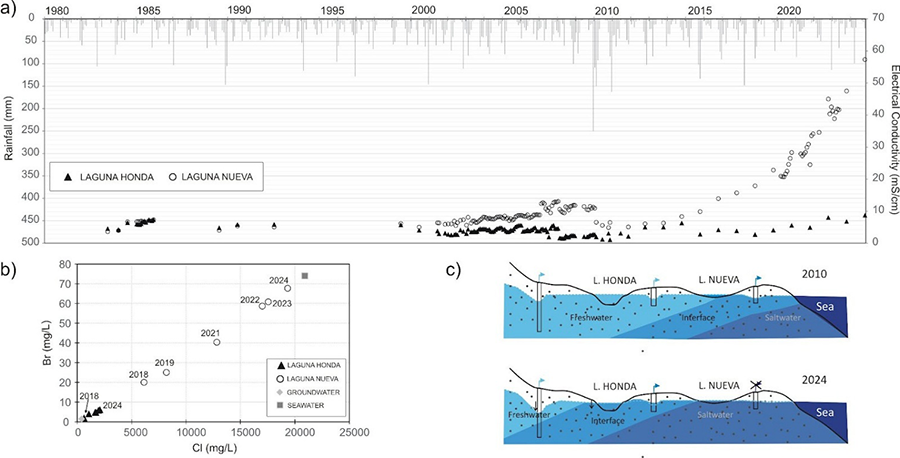
In agreement, Laguna Honda has consistently presented lower EC values (1 to 8.65 mS cm-1) than Laguna Nueva since the 1980s, with only minor exceptions in four early data points recorded in 1985 and between 1989 and 1992 (Fig. 3a). Between 2003 and 2008, EC values in both lagoons showed a weak increase, coinciding with the intensification of groundwater use for irrigation in the surrounding area until 2010. Around 2010, a period of increased precipitations resulted in a moderate decline of EC values in both lagoons. However, this trend was short-lived. Interestingly, from 2015 onward, Laguna Nueva experienced an exponential rise in EC, reaching values close to 45 mS cm-1 in recent years. In contrast, Laguna Honda showed a more gradual increase, with EC values remaining below 9 mS cm-1 until 2024 (Fig 3a).
Figure 3. Temporal dynamics of EC (a) and chloride and bromide ions concentration (b) in the Albuferas de Adra. (c) Scheme showing the evolution of salinity in the Adra River delta aquifer between 2010 and 2024 (modified from Rodríguez-Rodríguez et al., 2011).
Figura 3. Dinámica temporal de CE (a) y de la concentración de iones cloruro y bromuro (b) en las Albuferas de Adra. (c) El esquema muestra la evolución de la salinidad en el acuífero del delta del río Adra entre 2010 y 2024 (moficado de Rodríguez-Rodríguez et al., 2011).
Marine intrusion into the Albuferas de Adra is also clearly evidenced by the temporal dynamics of chloride and bromide ion concentrations in the lagoons (Fig 3b). Analysis of data from the four most recent sampling years (2018, 2019, 2020, and 2022) reveals two distinct trends that indicate an increasing marine influence, particularly in Laguna Nueva, but also in Laguna Honda: (i) Three distinct water groups are observed, ranging from low bromide concentrations in the aquifer, to high concentrations in seawater. These groups align in a gradient from Laguna Honda to Laguna Nueva, with Pearson correlation coefficients exceeding 0.99, indicating a strong linear relationship, and (ii) within each group, there is a progressive and sequential increase in marine influence across the four sampled years, suggesting a temporal intensification of salinization in both lagoons. The marine intrusion process was previously documented by Rodríguez-Rodríguez et al. (2011) over a decade ago. At that time, the rise in salinity was slight, with conductivity increasing from 6 to 10 mS cm-1. However, since then to now, this process has accelerated dramatically, with EC values in Laguna Nueva approaching those of seawater. In other words, since records began in 1975, we have transitioned from a brackish water lagoon to a saline lagoon (Fig. 3c).
While the effects of seawater intrusion in groundwater systems are well documented, its impact on coastal surface water bodies, such as lagoons, remains comparatively underexplored (Fiandrino et al., 2017). These ecosystems are recognized for their high conservation value due to their rich biodiversity and heightened vulnerability to anthropogenic pressures (Duggan and White, 2010). In this context, it is clear that the hydrological regime of the Albuferas de Adra has undergone severe alteration due to human-induced changes in land use and water management. These pressures have accelerated seawater intrusion, resulting in wetland marked salinization and posing a significant threat to their ecological function.
On the other hand, eutrophication is widely recognized as one of the most pressing environmental challenges for the conservation of aquatic ecosystems (Harper, 1992; Ansari et al., 2010; Le Moal et al., 2019), particularly in systems located in agricultural plains and densely populated lowland areas (Zhou et al., 2022). Lagoons are especially vulnerable due to their limited depth, small volume, and frequent occurrence in agricultural landscapes, which expose them to high external nutrient loads (Phillips, 2004; Zhou et al., 2022). In the Mediterranean region, this issue is particularly acute, as wetlands and shallow lakes often exhibit high catchment-to-lake area ratios, intensifying the influence of land-use activities on lake biogeochemistry (Álvarez-Cobelas et al., 2005). These characteristics make Mediterranean aquatic ecosystems especially sensitive to global change (de Vicente, 2021). This, along with the decrease in the surface area of the lagoons (Fig. 2), have led to eutrophication, primarily through increased phytoplanktonic primary production (Cruz-Pizarro et al., 2003; de Vicente et al., 2003). In addition to the high external nutrient load, these shallow lagoons exhibit pronounced instability and fluctuations in water quality, largely driven by rapid changes in internal nutrient recycling processes (de Vicente et al., 2006b).
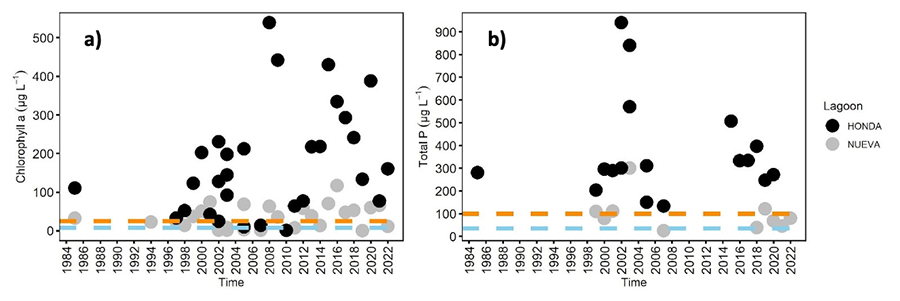
Based on the temporal evolution of the key variables commonly used to assess trophic status in freshwater ecosystems (i.e., TP, Chl-a; OECD, 1982), both Laguna Honda and Laguna Nueva can be classified as generally hypereutrophic (e.g. de Vicente et al., 2003, 2006a, b). Over the time period considered in this review, TP exhibited an exponential increasing trend in both lagoons (Fig. 4). TP levels consistently exceeded the hypereutrophic threshold (100 μg L⁻¹) in Laguna Honda, and in Laguna Nueva during the most recent year of record (2022). Similarly, Chl-a in Laguna Honda showed a sustained exponential increase, with values consistently above the hypereutrophic threshold (25 μg L⁻¹). In contrast, Chl-a in Laguna Nueva displayed marked interannual fluctuations, with minimum values corresponding to clear-water phases (2002–2003; Moreno-Ostos et al., 2007, 2008), and very high concentrations during the last decade, again exceeding the hypereutrophic threshold. Particularly noteworthy are the exceptionally high algal biomass levels (as indicated by Chl-a) in Laguna Honda. A recent study revealed the dominance of cyanobacteria (95.2%), followed by chlorophytes (2.7%), in its phytoplankton community (del Arco et al., 2021).
Figure 4. Interannual dynamics of (a) chlorophyll-a (μg L-1) and (b) total phosphorus (μg P L-1) concentrations in the Albuferas de Adra lagoons. Black and grey points represent Honda and Nueva lagoons, respectively. Horizontal lines stand for eutrophic (blue) and hypereutrophic (orange) levels based on OECD (1982).
Figura 4. Dinámica interanual de (a) concentración de clorofila a (μg L-1) y (b) fósforo total (μg P L-1) en las lagunas de las Albuferas de Adra. Los puntos negros y grises representan los valores en Laguna Honda y Laguna Nueva, respectivamente. Las líneas horizontales marcan los niveles eutróficos (azul) e hipereutrófico (naranaja) sgún OCDE (1982).
The progressive shift in phytoplankton composition of the Albuferas de Adra reflects a marked deterioration in water quality. Carrillo et al. (1987) showed that the wetland phytoplankton community was dominated by chlorophytes, with only minor contributions from dinoflagellates and other groups (Carrillo et al., 1987). Later assessments (Cruz-Pizarro et al., 2003) revealed increasing dominance of chrysophytes, chlorophytes and cryptophytes in Laguna Honda and a more mixed assemblage of chlorophytes, diatoms and chrysophytes in Laguna Nueva. More recent papers showed that years with low thermal stability favored chlorophytes, cryptophytes and small diatoms, whereas higher stability enhaced a marked dominance by filamentous cyanobacteria (Moreno-Ostos et al., 2007). The sharp rise in cyanobacteria—far exceeding the 7.4% reported in earlier surveys (Cruz-Pizarro et al., 2003)—provides clear evidence of advancing eutrophication and declining wetland ecological status.
The prolonged and severe eutrophication process that deteriorates the ecological state of the Albuferas de Adra is the result of a complex interplay between the high external (diffuse nutrient inputs from greenhouses) and internal (nutrients released from sediments) nutrient loads. In this context, de Vicente and Cruz-Pizarro (2003) found that in Laguna Honda the diffuse external load represented up to 90% of the annual external P load. To assess the state of stress to which an aquatic ecosystem is subjected, the actual external load received by an aquatic system is compared to the critical load estimated from empirical models. In fact, it is well known that the same external P load can be permissible or excessive depending on the morphometric characteristics (average depth, hydraulic load, and renewal time) of the receiving system (Vollenweider, 1975). If the external load is greater than the critical load, the system will accumulate P and eventually increase its trophic level, while if it is lower, the trophic status of the system will not change and, in the long term, could decrease. For the case of Laguna Honda, the results of applying critical load models have revealed that it received a P external load from 9 to 37 times higher than that considered tolerable (critical) (de Vicente and Cruz-Pizarro, 2003). Therefore, reducing this external load is highlighted as the first step in any management strategy that aims to go beyond being a cosmetic measure (minimizing effects rather than reducing causes).
The effects caused in the aquatic ecosystem by water eutrophication are exacerbated by the human introduction of Cyprinus carpio, already present in the wetland at least since the 1980s (Jiménez et al., 1986). This fish, which reaches high abundance mainly in the Laguna Honda (CSMAEA, Government of Andalusia, 2023, unpublished data), stirs up the bottom substrate of the lagoons, releasing nutrients and increasing the turbidity of the water. These changes provoke cascading effects that end up favoring the collapse of plant and animal life in the aquatic ecosystems (Dalu et al., 2022; Britton, 2023; Chen et al., 2024).
Reedbed vegetation
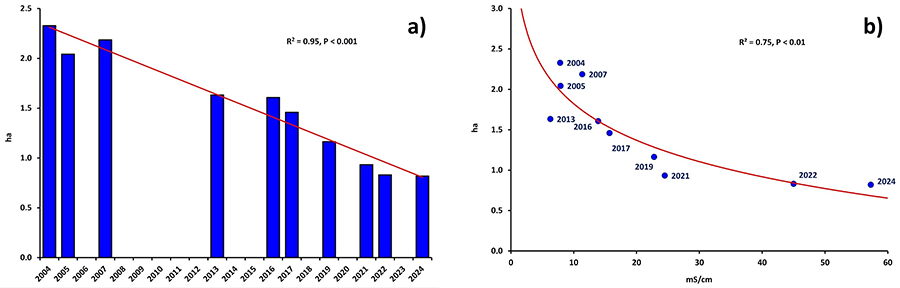
Due to the pressure exerted by intensive agriculture, the shorelines of the Albuferas de Adra are bordered by only a narrow fringe of natural terrestrial and helophytic vegetation dominated mainly by the reedbeds of Phragmites australis (Gómez-Mercado and Paracuellos, 1996), typically ranging from 4 to 12 meters in width along most of their perimeter, representing the thin surrounding belt that still persisted along most of the margin when the wetland received legal protection in 1989. Only the western edge of the two main lagoons, located within the Natural Reserve, retains a broader vegetated buffer (40 to 200 meters wide, covering 2 to 3 ha) characterized by structurally complex marsh vegetation, which supports higher biodiversity (Gómez-Mercado and Paracuellos, 1996; CMAOT, 2015). This zone is the most ecologically valuable area of the protected site, serving as a key habitat for breeding, resting, and feeding of fauna. However, temporal analysis of aerial imagery from this western sector reveals contrasting trends between the two lagoons. While the extent of vegetation in Laguna Honda has remained relatively stable over time, Laguna Nueva has experienced a progressive decline in reedbed cover between 2004 and 2024 (Fig. 5a), probably affected by the exponential increase in water salinity of the marsh system (Fig. 5b; Asaeda et al., 2003; Yang et al., 2014; Song et al., 2024).
Figure 5. (a) Evolution of the surface (ha) covered by the reed beds in the western end of Laguna Nueva from 2004 to 2024. (b) Relationship between surface covered by the reed beds in the western end (ha) and average annual EC in the water (mS/cm) of Laguna Nueva from 2004 to 2024.
Figura 5. (a) Evolución de la superficie (ha) cubierta por carrizal en el extremo occidental de la Laguna Nueva desde 2004 a 2024. (b) Relación entre la superficie de carrizal (ha) en el extremo occidental de la Laguna Nueva y la CE media anual (mS/cm) en el agua de la misma laguna desde 2004 a 2024.
This data review suggests that, if salinization trends persist, the reduction in reedbed cover in the Albuferas de Adra is expected to continue over the coming decades. Reedbeds dominated by Phragmites australis form part of the vegetation mosaic associated with the priority habitat 1150 Coastal Lagoons, formally recognized under the EU Habitats Directive, and serves as a critical refuge, feeding ground, and breeding site for numerous terrestrial and aquatic faunal species of conservation interest under both the Habitats and Birds Directives (European Union, 1992, 2010). These include, in the Classis Reptilia Mauremys leprosa, and in the Classis Aves Ardeola ralloides, Aythya nyroca, Fulica cristata, Circus aeruginosus, Ixobrychus minutus, Ardea purpurea, Alcedo atthis, Nycticorax nycticorax, Egretta garzetta, Porphyrio porphyrio, Botaurus stellaris, Ciconia nigra, Plegadis falcinellus, Platalea leucorodia, Ciconia ciconia, Casmerodius albus, Porzana porzana, Asio flammeus, Acrocephalus melanopogon, Acrocephalus paludicola, Zapornia parva, Zapornia pusilla, Marmaronetta angustirostris, and O. leucocephala (EALG, s.d.). The presence of these species was a key factor in the legal designation of the site as a Natural Reserve (Government of Andalusia, 1989).
In addition, the progressive increase in salinity, which appears to be causing bare patches within the reedbed, may facilitate the colonization of these areas by halophytic vegetation. In recent years, two halophytic species previously unrecorded in the Albuferas de Adra wetland, Salicornia ramosissima and Suaeda spicata, have been observed along the western shoreline of Laguna Nueva. Although currently restricted to this zone, these halophytes may continue to expand into the gaps left by the declining reedbeds as soil salinity increases, certainly transforming the structure and composition of the habitat.
Wetland fauna (waterbirds, marsh birds, fish, and amphibians)
Changes in water quality, particularly eutrophication and salinization, combined with the loss of wetland surface area and environmental pollution and degradation, have caused dramatic impacts on wetland fauna. For example, the increase in water conductivity resulting from seawater intrusion may have favoured the current occurrence within the submerged habitat of three invertebrate species characteristics of saline or hypersaline coastal environments that have never previously been reported from this wetland (Paracuellos et al. 2019): Cerastoderma glaucum, Cerastoderma edule and Palaemon varians (Mateo-Ramírez, Moreno-Lampreave, pers. comm.). However, the effects on animal species are especially pronounced in the abundance of the populations and in the community structure of waterbirds, whose species are largely legally protected or threatened and their presence was instrumental in the protection and management of the area (Government of Andalusia, 1989, 2001, 2015). The analysis of wintering waterbirds census reveals a statistically significant decline (n = 33 years; p < 0.05) in five species: Podiceps cristatus, Anas platyrhynchos, Gallinula chloropus, Aythya fuligula, and Cygnus olor (Fig. 6). Except for C. olor, whose population disappeared from the wetland following exotic species control programs, the observed population declines in the remaining species may be probably attributed to habitat degradation.
Figure 6. Annual dynamics in the winter (January) abundance of (a) Podiceps cristatus, (b) Anas platyrynchos, (c) Gallinula chloropus, and (d) Aythya fuligula in Albuferas de Adra wetland.
Figura 6. Dinámica anual de la abundancia en invernada (enero) de (a) Podiceps cristatus, (b) Anas platyrynchos, (c) Gallinula chloropus, y (d) Aythya fuligula en el humedal de Albuferas de Adra.
The study of breeding waterbirds census data provides a valuable indicator of species productivity. Over a 31-year period (n = 31 years; p < 0.05), a statistically significant decline has been recorded in the abundance of Tachybaptus ruficollis, O. leucocephala, and G. chloropus. Additionally, total abundances of grebes, ducks, coots, and related species have also shown a significant downward trend (Fig. 7).
Figure 7. Annual trends in the number of breeding pairs of (a) Tachybaptus ruficollis, (b) Oxyura leucocephala, (c) Gallinula chloropus, (d) grebes, (e) ducks, and (f) coots, and related species in Albuferas de Adra wetland.
Figura 7. Tendencia annual en el número de parejas reproductoras de (a) Tachybaptus ruficollis, (b) Oxyura leucocephala, (c) Gallinula chloropus, (d) zamnpullines, (e) patos, y (f) fochas y especies relacionadas, en el humedal de las Albuferas de Adra.
The dramatic decline in the breeding population of O. leucocephala is particularly noteworthy. From an average of approximately 24 pairs per year (with a maximum of 56) during the first two decades of monitoring up to 2010, the population has dropped to an average of 5 pairs (with a minimum of 1). This trend is especially concerning given that O. leucocephala was one of the umbrella species for the designation of the wetland as a protected area (Castro et al., 1998).
The causes of these population declines may be linked to pressures exerted by intensive greenhouse agriculture surrounding the wetland, as well as to processes of eutrophication, contamination, and deterioration of submerged habitat quality. The presence of C. carpio and the degradation and loss of helophytic vegetation due to environment destruction, hypersalinization and herbicide fumigation along the lagoon perimeters further contribute to the reduction of suitable breeding, resting and foraging habitats.
In contrast, in recent years, a notable increase in breeding pairs of Chroicocephalus ridibundus, Sterna hirundo, and other shorebirds species has been documented. The reproductive success of these species may have been facilitated by the degradation and loss of coastal helophytic vegetation, since they often build their nests on bare ground. In turn, the formation of these breeding colonies may further accelerate the degradation of the helophytic vegetation belt through trampling and nutrient enrichment caused by guano deposition.
With respect to marsh vegetation bird species in the Albuferas of Adra, several analyses carried out since the mid-20th century to the present also reveal a marked simplification of the community. This pattern is associated with the decline or local extinction of several species formerly present and is evident across long-term (approximately seven decades), medium-term (three decades), and short-term (one decade) temporal scales. The trend is particularly pronounced among species strongly dependent on wetland habitats. This progressive impoverishment of the community structure over time appears to be linked to the probable disappearance or decline of at least ten species during their migratory, breeding, or wintering periods. These species include Luscinia megarhynchos, Erithacus rubecula, Cettia cetti, Locustella luscinioides, A. melanopogon, Acrocephalus scirpaceus, Acrocephalus arundinaceus, Phylloscopus collybita, Remiz pendulinus, and Emberiza schoeniclus. The declines are likely driven by the depauperation of suitable habitat observed in the Albuferas de Adra wetland. Furthermore, these local processes may have been exacerbated by broader-scale declines in some of these species, possibly associated with the widespread environmental transformation and degradation in Europe, and the climate change (Paracuellos et al., in press).
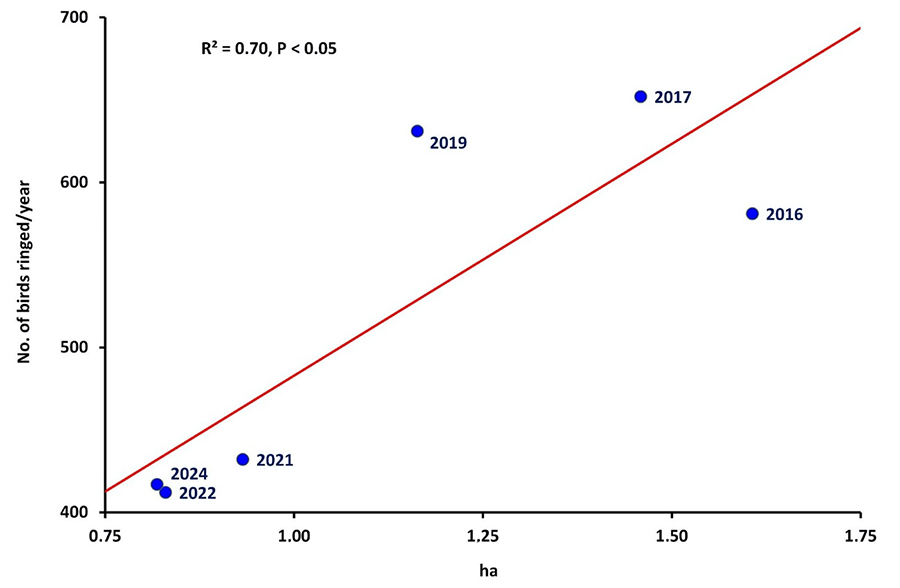
At the local scale, several key anthropogenic pressures appear to be likely contributing to this decline: (i) the loss, fragmentation, and deterioration of the ecosystem due to the occupation and pollution of the environment by agricultural intensification; (ii) the loss of reed-beds due to the hypersalinization of the wetland (Fig. 8); (iii) the uncontrolled grazing; and (iv) the proliferation of exotic and/or invasive species such as Felis catus, Rattus spp., Mus spp., and Sus scrofa (Paracuellos et al., in press).
Figure 8. Relationship between surface covered by the reed beds (ha) and relative abundance of marsh birds ringed through constant effort (number of birds ringed/year) on the western end of Laguna Nueva from 2016 to 2024.
Figura 8. Relación entre la superficie cubierta de carrizal (ha) y la abundancia relativa de aves palustres anilladas mediante esfuerzo constante (número de aves anilladas/año) en el extremo occidental de la Laguna Nueva entre 2016 y 2024.
Currently, the Albuferas de Adra harbor both native fish species, such as A. iberus and Anguilla anguilla, and introduced species, including C. carpio and Gambusia holbrooki (Paracuellos et al., 2019), with no further evidence of native species still present at the end of the 20th century, such as Atherina boyeri, Chelon labrosus, or Liza aurata (Martínez Vidal and Castro, 1990). Attending to A. iberus, the fish has experienced an extreme reduction in its range of distribution of the Adra river basin during the last decade. For example, this species had already disappeared by 2024 from 79% of the hundreds of irrigation ponds where it lived in the area 13 years ago (Government of Andalusia, 2025, unpublished data). Specifically, within the Albuferas de Adra Natural Reserve, one of only two natural habitats occupied by the fish in the basin, alongside the riverbed the species is currently restricted to Laguna Nueva (Government of Andalusia, 2025, unpublished data) where, moreover, the individuals showed signs of low metabolic activity agreeing with the chronic eutrophication of the lagoon (Casas et al., 2011). It has already disappeared from Laguna Honda, where it had maintained a continuous presence until 2011 (CSMAEA, Government of Andalusia, 2023, unpublished data). Multiple factors may explain the disappearance of A. iberus from two of the water bodies within the wetland (CSMAEA, Government of Andalusia, 2023, unpublished data). Laguna Honda receives runoff from the surrounding watershed via seasonal streams, which are heavily contaminated with agrochemicals. Additionally, the massive presence of invasive species, namely C. carpio and G. holbrooki, compromises the viability of the native fish populations. Due to all these impacts affecting their habitat, recent reintroduction efforts of A. iberus into Laguna Honda and the nearby located Laguna Cuadrada of Adra have been unsuccessful (Government of Andalusia, 2025, unpublished data). In contrast, Laguna Nueva shows a slight upward trend in the A. iberus population. According to CSMAEA (Government of Andalusia, 2023, unpublished data), increasing salinity in this lagoon may be contributing to this trend by favoring it over the competing exotic species. However, this evolution is marked by strong fluctuations, with periods of high density followed by significant mortality events, such as the one recorded in 2019 (CSMAEA, Government of Andalusia, 2023, unpublished data). Thus, the species, confined to its only remaining habitat within the Albuferas de Adra, is at serious risk of extinction due to eutrophication, biocide contamination, invasive species pressure, and the regression of emergent shoreline vegetation. Following CSMAEA (Government of Andalusia, 2023, unpublished data), the current model of intensive agricultural use in the surrounding area (i.e., greenhouse farming) is incompatible with the conservation of both the Natural Reserve ecosystem and A. iberus.
Finally, amphibians with strong dependence on aquatic environments tend to have marginal and threatened populations in arid and semi-arid regions. This is the case of H. meridionalis at the southeastern edge of its Iberian distribution, where this hylid has disappeared from the entire province of Murcia and its current distribution area is reduced to token points in Almería and Alicante (Paracuellos et al., 2025). In the Albuferas de Adra Natural Reserve, home to the last viable population of the amphibian in southeastern Iberia, the species was recorded at 9 of 12 sampled sites during 1980–1990, but only at 8 sites during 2016–2019 (Paracuellos et al., 2025). Even though its distribution range in the wetland has not substantially changed in the last 30 years up to its last sampling in 2019, the accelerated deterioration suffered in the Albuferas de Adra from six years later may have continued to negatively affect its current presence in the lagoons, taking into account the usual status of the hylids as sentinels of the environmental quality and the conservation status of the habitats they occupy (Sillero, 2014; Valdespino et al., 2015, Button et al., 2022). In this context, the species has experienced a local extinction at one of the traditionally most important breeding sites in Adra, located within the Peripheral Protection Zone of the Natural Reserve. Moreover, the current point where the largest abundance in the wetland is located in a massively polluted site. The loss of this tree frog is primarily attributed to uncontrolled agricultural waste discharge and the complete disappearance of surface water, necessary for reproduction (Paracuellos et al., 2025).
The “Almerian miracle” —the rapid expansion of intensive, greenhouse‑based horticulture in one of Europe’s driest regions— has frequently been presented as a successful model of agricultural development. However, this resource‑intensive production system has generated significant ecological pressures across the coastal wetlands of Southeastern Spain, including the Albuferas de Adra and many other wetland complexes. Sustained groundwater extraction, nutrient enrichment, hydrological alteration, and landscape simplification are accelerating the degradation of these ecosystems, many of which hold high conservation value. This contrast underscores the environmental costs embedded within development trajectories based on intensive agricultural production in water‑limited socio‑ecological systems
Final remarks: Are we facing a failed Natural Reserve? The urgency of decisive conservation action
1. A protected wetland on the brink of collapse. Like many Mediterranean coastal wetlands, the Albuferas de Adra Natural Reserve has undergone decades of accelerated degradation quantified since the mid-20th century, resulting in a profound loss of ecological integrity. Its hydrological functioning, water quantity and quality, and biological community structure are now severely altered. Consequently, the biodiversity and environmental values that originally justified its legal protection are close to being irreversibly lost.
2. Intensive agriculture as the main driver of degradation. Without immediate and effective measures to reduce the direct pressures exerted by intensive greenhouse production, this system risks becoming a paradigmatic example of failure in protected area management. In this context, establishing a greenhouse free buffer zone around the wetland is essential to facilitate the adoption of improved nutrient and water management practices, promote biological control, and reduce pesticide and fertilizers use, thereby mitigating the ecological impacts associated with surrounding agricultural activities.
3. A socio-ecological dimension of failure: disconnection and invisibility. Importantly, the current degradation of the Albuferas de Adra cannot be explained solely by direct biophysical pressures. It also reflects a long-standing disconnection between the wetland and local society, which has weakened the social recognition of its multiple values and reduced its visibility in local governance. This situation has facilitated the persistence of environmentally harmful practices and limited the effectiveness of existing protection frameworks. Addressing this crisis requires approaches that explicitly conceive the wetland as a social ecological system, in which academia plays a catalytic role by promoting environmental education processes that engage citizen science and decision makers. Such initiatives can help build pathways integrating governance institutions, actors, researchers, and local communities within a coordinated program for wetland conservation and restoration.
4. Urgent, science-based conservation measures are unavoidable. To prevent an imminent ecological collapse of the Albuferas de Adra, this review calls on the competent environmental authorities to implement drastic conservation and restoration actions grounded in scientific evidence. These measures must be applied not only in the immediate surroundings of the wetland but across its entire watershed, and should include:
· A substantial reduction and ecological restoration of greenhouse-covered areas throughout the catchment.
· An expansion of the legally protected area to incorporate remaining unprotected marshlands and areas currently undergoing restoration.
· Active regulation of hydrological regimes, alongside the control of eutrophication and salinization processes.
· Systematic eradication of exotic and invasive species.
· A fundamental improvement in the environmental sustainability of agricultural practices, including enhanced surveillance and strict control of harmful activities such as uncontrolled waste dumping, removal of accumulated solid waste and other anthropogenic debris, fumigation of emergent vegetation, and unregulated grazing.
5. A clear legal and policy mandate for restoration. These interventions are firmly supported by the binding framework of the EU Nature Restoration Law and the Spanish National Restoration Plan. This legislation requires Member States to restore at least 20% of degraded land and sea areas by 2030, with the objective of achieving full ecosystem recovery by 2050. Beyond conservation, these policies aim to restore ecosystem functionality, enhance carbon sequestration, and secure the long-term provision of ecosystem services.
6. Proven restoration pathways in degraded coastal wetlands. Efforts to restore degraded protected coastal wetlands increasingly show that ecological recovery is possible when management prioritizes the reduction of nutrient inputs and the re- establishment of natural hydrological processes. Across the Mediterranean region, effective strategies include closing illegal wells, reducing groundwater abstraction, recovering historical water inflows, adopting zero discharge policies and implementing nature-based solutions such as green filters and constructed wetlands to intercept nutrient loads. Succesful initiatives undertaken in other Spanish protected coastal wetlands such as Doñana (Southwest Spain) and Mar Menor (Southeast Spain) exemplify how these coordinated actions can halt and even reverse long term degradation linked to agricultural intensification, offering a valuable reference framework for the restoration of other coastal wetlands facing similar pressures.
7. A narrow window of opportunity. The evidence presented in this review underscores the urgent need to implement comprehensive conservation and restoration strategies for the Albuferas de Adra. Adopting the hydrological and nature-based management approaches successfully applied in Doñana and Mar Menor offers a realistic and scientifically validated framework to enhance ecosystem resilience. Applying these technical and legal lessons is essential to ensure compliance with the mandatory recovery targets of the EU Nature Restoration Law and to prevent the irreversible loss of one of southern Spain’s most valuable coastal wetlands
Authors´contribution
E. Moreno-Ostos: Conceptualization, Formal analysis, Funding acquisition, Investigation, Resources, Supervision, writing-original manuscript, Writing – review & editing. P. Carrillo: Conceptualization, Supervision, writing-original manuscript, Writing – review & editing. A. J. Castro: Formal analysis, Investigation, Methodology, Writing – original draft, Writing – review & editing. I. de Vicente: Conceptualization, Formal analysis, Funding acquisition, Investigation, Supervision, writing-original manuscript, Writing – review & editing. M. Expósito-Granados Data curation, Investigation, Methodology, Writing-review and editing. J. Gisbert-Gallego Formal analysis, Investigation, Methodology, Resources, Writing – original draft, Writing – review & editing. J.M. Medina-Sánchez: Conceptualization, Supervision, writing-original manuscript, Writing – review & editing. J. L. Molina-Pardo: Data curation, Investigation, Methodology, Visualization, Writing-review and editing. M. Paracuellos: Data curation, Formal analysis, Investigation, Methodology, Visualization, Writing – original draft, Writing – review & editing. J. M. Requena Mullor: Data curation, Formal analysis, Methodology, Software, Visualization, Writing – original draft, Writing – review & editing. J. Rubio-Ríos: Data curation, Formal analysis, Visualization, Writing-review and editing. M. Ruiz-Nieto: Data curation, Formal analysis, Investigation, Methodology, Writing-original manuscript, Writing-review and editing. M. Santa: Data curation, Investigation, Methodology, Visualization, Writing-review and editing. F. Sola: Formal analysis, Investigation, Methodology, Resources, Writing – original draft, Writing – review & editing. A. Vallejos: Formal analysis, Investigation, Methodology, Resources, Writing – original draft, Writing – review & editing. E. Villanueva: Data curation, Investigation, Methodology, Visualization, Writing-review and editing. P. Warren-Jiménez: Data curation, Formal analysis, Investigation, Methodology, Writing-original manuscript, Writing-review and editing. J.J. Casas: Conceptualization, Formal analysis, Funding acquisition, Investigation, Supervision, writing-original manuscript, Writing – review & editing
Data and Code Availability
All data supporting the findings of this article have been deposited in the institutional repository of the University of Málaga (RiUMA) to ensure compliance with the fair principles, and are openly available for download at https://doi.org/10.24310/riuma.47412 or https://hdl.handle.net/10630/47412
Financing, required permits, potential conflicts of interest and acknowledgments
In memory of our esteemed colleague Abel La Calle, who from the very beginning was deeply committed to the conservation of the Albuferas of Adra, contributing to his expertise in environmental law and legal frameworks.
We extend our gratitude to the successive cohorts of second-year Environmental Sciences students from the University of Almería for their annual field sampling. We also thank the volunteers who contributed to the scientific bird banding programs at the Albuferas de Adra (EALG). Their commitment to sampling campaigns at the Albuferas de Adra has been instrumental in maintaining the long-term data series presented in this study.
Dr. Ángel Mateo-Ramírez (Centro Oceanográfico de Málaga, IEO-CSIC) kindly identified C. edule and P. varians from samples recently collected in Albuferas de Adra.
This interdisciplinary review emerged within the framework of the “Scientific-Technical Conference on the Ecological State of the Albuferas de Adra Natural Reserve”, organized and funded by the International Campus of Excellence in Marine Science (CEIMAR) on May 5, 2023, in Adra (Almería, Spain).
The authors declare that they have no conflicts of interest.
References
Alcalá, F. J., Martínez-Pagán, P., Paz, M. C., Navarro, M., Pérez-Cuevas, J., & Domingo, F. (2021). Combining of MASW and GPR imaging and hydrogeological surveys for the groundwater resource evaluation in a coastal urban area in southern Spain. Applied Sciences, 11(7), 3154. https://doi.org/10.3390/app11073154
Álvarez-Cobelas, M., Rojo, C. & Angeler, D. G. (2005). Mediterranean limnology: current status, gaps and the future. Journal of Limnology, 64, 13–29. https://doi.org/10.4081/jlimnol.2005.13
Ansari, A. A., Singh, G. S., Lanza, G. R. & Rast, W. (Eds.). (2010). Eutrophication: causes, consequences and control (Vol. 1). Springer Science and Business Media. https://doi.org/10.1007/978-90-481-9625-8
Asaeda, T., Manatunge, J., Fujino, T. & Sovira, D. (2003). Effects of salinity and cutting on the development of Phragmites australis. Wetlands Ecology and Management, 11(3): 127-140. https://doi.org/10.1023/A:1024289025415
Bayo Montoya, M. M. (2005). Estructura, dinámica y producción de la fauna bentónica de las Albuferas de Adra (Almería). Editorial Universidad de Almería.
Britton, J. R. (2023). Contemporary perspectives on the ecological impacts of invasive freshwater fishes. Journal of Fish Biology, 103(4): 752-764. https://doi.org/10.1111/jfb.15240
Button, S. T., Greenberg, C. H. & Austin, J. D. (2022). Recruitment patterns and potential climate change impacts on three Florida Hylids with different life histories. Diversity, 14: 129. https://doi.org/10.3390/d14020129
Carol, E. S., Del Pilar Alvarez, M., Tanjal, C. & Bouza, P. J. (2021). Factors controlling groundwater salinization processes in coastal aquifers in semiarid environments of north Patagonia, Argentina. Journal of South American Earth Sciences, 110, 103356. https://doi.org/10.1016/j.jsames.2021.103356
Carrillo, P., Cruz-Pizarro, L., Morales, R. & Sánchez-Castillo, P. (1987). Cambios estacionales en las comunidades de fitoplancton y de zooplancton de la Albufera de Adra. Limnetica 3(2): 243-254. https://doi.org/10.23818/limn.03.30
Casas, J. J., Sánchez, J., Sanz, A., Furné, M., Trenzado, C., Juan, M … Ramos-Miras, J. J. (2011). The paradox of the conservation of an endangered fish species in a Mediterranean region under agricultural intensification. Biological Conservation, 144, 253–262. https://doi.org/10.1016/j.biocon.2010.08.023
Castro, A.J., Martín-López, B., García-Llorente, M., Aguilera, P. A., López, E. & Cabello, J. (2011). Social preferences regarding the delivery of ecosystem services in a semiarid Mediterranean region. Journal of Arid Environments, 75, 1201–1208. https://doi.org/10.1016/j.jaridenv.2011.05.013
Castro, A. J., Martín-López, B., López, E., Plieninger, T., Alcaraz-Segura, D., Vaughn, C. C. & Cabello, J. (2015). Do protected areas networks ensure the supply of ecosystem services? Spatial patterns of two nature reserve systems in semi-arid Spain. Applied Geography, 60, 1–9. https://doi.org/10.1016/j.apgeog.2015.02.012
Castro, A. J., López-Rodríguez, M. D., Giagnocavo, C., Giménez, M., Céspedes, L., La Calle, A., … Valera, L. (2019). Six collective challenges for sustainability of Almería greenhouse horticulture. International Journal of Environmental Research and Public Health, 16, 4097. https://doi.org/10.3390/ijerph16214097
Castro, H., Nevado, J. C. & Paracuellos, M. (1998). Albufera de Adra. In, Bernués, M. (coord.): Humedales españoles inscritos en la lista del Convenio de Ramsar (2ª edición), pp. 307-313. Organismo Autónomo Parques Nacionales (Ministerio de Medio Ambiente). Madrid, España.
Chen, X., Evans, T. G., Jeschke, J. M., Jähnig, S. C. & He, F. (2024). Global introductions and environmental impacts of freshwater megafish. Global Change Biology, 30(4): e17289. https://doi.org/10.1111/gcb.17289
Cheng, A. H. D. & Ouazar, D. (2003). Coastal Aquifer Management: Monitoring, Modeling, and Case Studies. CRC Press, 296 p. https://doi.org/10.1201/9780203493496
CMA (2001). Resolución de 20 de noviembre de 2001, de la Dirección General de Planificación, por la que se emplaza para información pública a todos aquellos interesados en la propuesta de designación como Zona de Especial Protección para las Aves de determinados Espacios Naturales Protegidos de Andalucía. Boletín Oficial de la Junta de Andalucía, 144, of 15 December 2001: 20,167- 20,169.
CMAOT (2015). Decreto 7/2015, de 20 de enero, por el que se declaran las Zonas Especiales de Conservación de la Red Ecológica Europea Natura 2000 Albufera de Adra (eS6110001) y Laguna Honda (eS6160001) y se aprueban el Plan de Ordenación de los Recursos Naturales de la Reserva Natural Albufera de Adra y el Plan de Ordenación de los Recursos Naturales de las Reservas Naturales Laguna Honda y Laguna del Chinche. Boletín Oficial de la Junta de Andalucía, 51, of 16 March 2015: 109-272.
Council of Ministers (1994). Resolución de 4 de noviembre de 1994, de la Subsecretaria, por la que se dispone la publicación del Acuerdo del Consejo de Ministros de 15 de julio de 1994, por el que se autoriza la inclusión de los embalses de Cordabilla y Malpasillo, albufera de Adra, ría del Ea, Mar Menor, marismas de Santoña y marjal de Pego-Oliva, en la lista del Convenio de Ramsar, relativo a Humedales de Importancia Internacional, especialmente como Hábitat de Aves Acuáticas (Ramsar. 2 de febrero de 1971). Boletín Oficial del Estado, 273, of 15 November 1994: 35,011-35,027.
CSMA (2024). Programa de Emergencias, Control Epidemiológico y Seguimiento de Fauna Silvestre. Reproducción de aves acuáticas en Andalucía 2023. Consejería de Sostenibilidad y Medio Ambiente (Junta de Andalucía). Sevilla. https://www.juntadeandalucia.es/medioambiente/portal/documents/20151/614346/Informe-Regional-Aves-Acuaticas-reproduccion-2023.pdf/0be1e771-f098-0dcd-3f2c-cb3533c4e3fe?t=1729515722633
Cruz-Pizarro, L., de Vicente, I., Moreno-Ostos, E., Amores, V. & El Mabrouki, K. (2003). Estudios de diagnóstico y viabilidad en el control de la eutrofización de las lagunas de la Albufera de Adra. Limnetica, 22(1–2), 135–154. https://doi.org/10.23818/limn.22.09
Dalu, T., Cuthbert, R. N., Moyo, S., Wasserman, R. J., Chari, L. D., Weyl, O. L. F. & Jackson, M. C. (2022). Invasive carp alter trophic niches of consumers and basal resources in African reservoirs. The Science of the Total Environment, 813: 152625. https://doi.org/10.1016/j.scitotenv.2021.152625
de Vicente, I. (2004). Intercambio de nutrientes en la interfase agua-sedimento de dos lagunas costeras de elevado nivel trófico: La Albufera de Adra (Almería). Ph D Thesis. University of Granada (Spain). 298 pp.
de Vicente, I. (2021). Biogeochemistry of Mediterranean wetlands: a review about the effects of water-level fluctuations on phosphorus cycling and greenhouse gas emissions. Water, 13, 1510. https://doi.org/10.3390/w13111510
de Vicente, I. & Cruz-Pizarro, L. (2003). Estudio de la carga externa e interna de fósforo y aplicación de modelos empíricos de eutrofización en las lagunas de la Albufera de Adra. Limnetica, 22 (1-2): 165-181. https://doi.org/10.23818/limn.22.11
de Vicente, I., Serrano, L., Amores, V., Clavero, V. & Cruz-Pizarro, L. (2003). Sediment phosphate fractionation and interstitial water phosphate concentration in two coastal lagoons (Albuferas de Adra, SE Spain). Hydrobiologia, 492, 95–105. https://doi.org/10.1023/A:1024813811763
de Vicente, I., Moreno-Ostos, E., Amores, V., Rueda, F. & Cruz-Pizarro, L. (2006a). Low predictability in the dynamics of shallow lakes: implications for their management and restoration. Wetlands, 26(4), 928–938. https://doi.org/10.1672/0277-5212(2006)26[928:LPITDO]2.0.CO;2
de Vicente, I., Amores, V. & Cruz-Pizarro, L. (2006b). Instability of shallow lakes: A matter of the complexity of factors involved in sediment and water interaction? Limnetica, 25(1-2): 253-270. https://doi.org/10.23818/limn.25.18
del Arco, A., Álvarez-Manzaneda, I., Funes, A., Pérez-Martínez, C. & de Vicente, I. (2021). Assessing the toxic effects of magnetic particles used for lake restoration on phytoplankton: a community-based approach. Ecotoxicology and Environmental Safety, 207, 111288. https://doi.org/10.1016/j.ecoenv.2020.111288
Duggan, I. C. & White, M. A. (2010). Consequences of human-mediated marine intrusions on the zooplankton community of a temperate coastal lagoon. New Zealand Journal of Marine and Freshwater Research, 44(1), 17–28.ç. http://dx.doi.org/10.1080/00288331003641661
Fiandrino, A., Ouisse, V., Dumas, F., Lagarde, F., Pete, R., Malet, N., Le Noc, S. and De Wit, R. (2017). Spatial patterns in coastal lagoons related to the hydrodynamics of seawater intrusion. Marine Pollution Bulletin, 119(1), 132–144. https://doi.org/10.1016/j.marpolbul.2017.03.006
EALG (s.d.). Las Albuferas de Adra. Estación de Anillamiento Lorenzo García. https://ealorenzogarcia.wordpress.com/las-albuferas-de-adra/ [Accessed on 13/12/2025].
European Union (1992). Council Directive 92/43/EEC on the conservation of natural habitats and of wild fauna and flora. Official Journal of the European Union, L 206, of 22 July 1992: 7-50.
European Union (2010). Directive 2009/147/EC of the European Parliament and of the Council of 30 November 2009 on the conservation of wild birds. Official Journal of the European Union, L 20, of 26 January 2010: 7-25.
Gómez Mercado, F. & Paracuellos, M. (1996). Hábitats de las albuferas de Adra (Almería) recogidos en el Anexo I de la Directiva 92/43/CEE. Boletín del Instituto de Estudios Almerienses, 14(Ciencias): 59-76.
Google Earth (s.d.). Google Earth Pro. 7.3.6.10441 (64-bit). Google LLC. https://www.google.es/intl/es/earth/index.html Accessed on [25/01/2026].
Government of Andalusia (1989). Ley 2/1989, de 18 de julio, por la que se aprueba el Inventario de Espacios Naturales Protegidos de Andalucía, y se establecen medidas adicionales para su protección; Boletín Oficial de la Junta de Andalucía, 60, of 27 July 1989: 3,367-3,480.
Government of Andalusia (2001). Resolución de 20 de noviembre de 2001, de la Dirección General de Planificación, por la que se emplaza para información pública a todos aquellos interesados en la propuesta de designación como Zona de Especial Protección para las Aves de determinados Espacios Naturales Protegidos de Andalucía. Boletín Oficial de la Junta de Andalucía, 144, of 15 December 2001: 20.167-20.169.
Government of Andalusia (2012). Decreto 23/2012, de 14 de febrero, por el que se regula la conservación y el uso sostenible de la flora y la fauna silvestres y sus hábitats. Boletín Oficial de la Junta de Andalucía, 60, of 27 March 2012: 114-163.
Government of Andalusia (2015). Decreto 7/2015, de 20 de enero, por el que se declaran las Zonas Especiales de Conservación de la Red Ecológica Europea Natura 2000 Albufera de Adra (ES6110001) y Laguna Honda (ES6160001) y se aprueban el Plan de Ordenación de los Recursos Naturales de la Reserva Natural Albufera de Adra y el Plan de Ordenación de los Recursos Naturales de las Reservas Naturales Laguna Honda y Laguna del Chinche. Boletín Oficial de la Junta de Andalucía, 51, of 16 March 2015: 109-272.
Harper, D. (1992). Eutrophication of freshwaters: Principles, problems and restoration. Chapman and Hall, London, 327 p. https://doi.org/10.1007/978-94-011-3082-0
Herbert, E. R., Boon, P., Burgin, A. J., Neubauer, S. C., Franklin, R. B., Ardón, M., ... Gell, P. (2015). A global perspective on wetland salinization: ecological consequences of a growing threat to freshwater wetlands. Ecosphere, 6(10), 1-43. https://doi.org/10.1890/ES14-00534.1
IGN (s.d.). Fototeca Digital. Visualizador de Fotogramas. Instituto Geográfico Nacional (Ministerio de Transportes y Movilidad Sostenible). https://fototeca.cnig.es/fototeca/ Accessed on [25/01/2026].
INE. (2014). Estadísticas del Medio Ambiente en España 2014. Instituto Nacional de Estadística, Madrid, España.
IUCN (s.d.). The IUCN Red List of Threatened Species. Version 2025-2. https://www.iucnredlist.org Accessed on [13/12/2025].
Jiménez, A. P., Embí, A., Pérez, F., Jiménez, R., García, P. F. & Valls, M. D. (1986). Las Albuferas de Adra. Jiménez et al. (Ed.). Almería: 188 pp
Le Moal, M., Gascuel-Odoux, C., Ménesguen, A., Souchon, Y., Étrillard, C., Levain, A. & Pinay, G. (2019). Eutrophication: a new wine in an old bottle? Science of the Total Environment, 651, 1–11. https://doi.org/10.1016/j.scitotenv.2018.09.139
López-Rodríguez, M., Castro, A. J., Castro, H. & Cabello, J. (2015). Science–policy interface for addressing environmental problems in arid Spain. Environmental Science and Policy, 50, 1–14. https://doi.org/10.1016/j.envsci.2015.01.013
Hoffmann, G. (1988). Holozänstratigraphie und Künstenlinienverlagerung an der Andalusischen Mittelmerküste. Berichte, 2. Fachbereich Geowissenschaften (Universität Bremen). Bremen.
Mahlknecht, J., Merchán, D., Rosner, M., Meixner, A. & Ledesma-Ruiz, R. (2017). Assessing seawater intrusion in an arid coastal aquifer under high anthropogenic influence using major constituents, Sr and B isotopes in groundwater. Science of the Total Environment, 587, 282–295. https://doi.org/10.1016/j.scitotenv.2017.02.137
Martínez Vidal, J. L. & Castro, H. (coords.) (1990). Las Albuferas de Adra. Estudio Integral. Instituto de Estudios Almerienses (Diputación Provincial de Almería). Almería.
Moreno-Ostos, E., Rodrigues da Silva, S. L., de Vicente, I. & Cruz-Pizarro, L. (2007). Interannual and between-site variability in the occurrence of clear water phases in two shallow Mediterranean lakes. Aquatic Ecology, 41(2), 285–297. https://doi.org/10.1007/s10452-006-9072-0
Moreno-Ostos, E., Paracuellos, M., de Vicente, I., Nevado, J. C. & Cruz-Pizarro, L. (2008). Response of waterbirds to the alternation of clear and turbid water phases in two shallow Mediterranean lakes. Aquatic Ecology, 42, 701–706. https://doi.org/10.1007/s10452-007-9141-z
Moreno-Ostos, E., Carrillo, P., Castro, A. J., de Vicente, I., Expósito-Granados, M., Gisbert-Gallego, J., … Casas, J. J. (2026). The Albuferas de Adra in crisis_ a comprehensive review demanding urgent conservation action_ Ecosistemas, 2026_Data.xlsx. https://doi.org/10.24310/riuma.47412. https://hdl.handle.net/10630/47412
OECD. (1982). Eutrophisation des eaux. Méthodes de surveillance, d’évaluation et de lutte. OECD, Paris, France, 164 pp.
Paracuellos, M. (2002). Valor ambiental de Albuferas de Adra. In, Nevado, J.C. &Paracuellos, M. (coords.): Agricultura y medio ambiente en el entorno de Albuferas de Adra, pp. 51-63. Life-Naturaleza 1998 “Conservación de las Albuferas de Adra (Almería)” (Dirección General de Medio Ambiente, Unión Europea; Consejería de Medio Ambiente, Junta de Andalucía). Almería.
Paracuellos, M. (2006). Las Albuferas de Adra (Almería, Sudeste Ibérico) y su relación histórica con el hombre. Farua, Extra I: 335-338.
Paracuellos, M. (2008). Effects of long-term habitat fragmentation on a wetland bird community. Revue d’Ecologie (Terre et Vie), 63: 227-238. https://doi.org/10.3406/revec.2008.1414.
Paracuellos, M., Gómez de Dios, M. A., Gutiérrez, L. & Moreno-Ostos, E. (2019). Lista patrón de las especies biológicas identificadas en las albuferas de Adra (Almería, España, sureste ibérico). Boletín de la Real Sociedad Española de Historia Natural, 113: 33-41. https://doi.org/10.29077/bol/113/ce05_paracuellos
Paracuellos, M., Rodríguez-Caballero, E., Villanueva, E., Santa, M., Alcalde, F., Dionisio, M. A., … Avilés, J. M. (2022). Citizen science reveals broad-scale variation of calling activity of the Mediterranean tree frog (Hyla meridionalis) in its westernmost range. Amphibia-Reptilia, 43: 251-261. https://doi.org/10.1163/15685381-bja10094
Paracuellos, M., Rodríguez-Caballero, E., Villanueva, E., Santa, M., Molina, J. L., González Miras, E., … Avilés, J. M. (2025). Citizen science reveals sharp decline of the Mediterranean tree frog Hyla meridionalis over 40 years in southeastern Iberia: potential causes and proposed solutions to prevent regional extinction. Animal Biodiversity and Conservation, 48(1): e0007. https://doi.org/10.32800/abc.2025.48.0007
Paracuellos, M., Díaz, J. M., Expósito, M., Garrido, J., González, E., Hernández, C., … Molina, J. L. (2026). La Estación de Anillamiento Lorenzo García como observatorio de cambio durante más de una década: tendencias poblacionales de la avifauna en la vegetación emergente de las Albuferas de Adra (Almería, sudeste ibérico). Cañadú, 0: 74-91. https://canadu.adra.es/pdf/Articulo05-Mariano_Paracuellos.pdf
Pulido-Velázquez, M., Andreu, J., Sahuquillo, A., Pinilla, V., Sánchez, A., Capilla, J., & Paredes, J. (2002), Optimization of water resources management under aquifer overexploitation conditions: The Adra-Campo de Dalias system, Spain. WIT Transactions on Ecology and the Environment, 52, 87–99.
Pérez-Ramírez, I., Requena-Mullor, J. M., Castro, A. J. & García-Llorente, M. (2023). Land transformation changes people’s values of ecosystem services in Las Vegas agrarian landscapes of Madrid, Spain. Land Use Policy, 134, 106861. https://doi.org/10.1016/j.landusepol.2023.106921
Phillips, G. L. (2004). Eutrophication of shallow temperate lakes. In: The Lakes Handbook: Lake Restoration and Rehabilitation, Vol. 2, pp. 261–278. https://doi.org/10.1002/9780470750506.ch10
Polemio, M. & Walraevens, K. (2019). Recent research results on groundwater resources and saltwater intrusion in a changing environment. Water, 11(6), 1118. https://doi.org/10.3390/w11061118
Quintas-Soriano, C., Castro, A. J., Castro, H. & García-Llorente, M. (2016). Impacts of land use change on ecosystem services and implications for human well-being in Spanish drylands. Land Use Policy 54, 534–548. https://doi.org/10.1016/j.landusepol.2016.03.011
Quintas-Soriano, C., García-Llorente, M. & Castro, A. J. (2018). What has ecosystem service science achieved in Spanish drylands? Evidences of need for transdisciplinary science, Journal of Arid Environments, 159: 4-10. https://doi.org/10.1016/j.jaridenv.2018.01.004
Requena-Mullor, J. M, Oyonarte, C., Castro, H. & Cabello, J. (2015). tranUSE: a Java application to compute and label land use trajectories http://www.github.com/jmrmcode/tranUSE
Requena-Mullor, J. M., Quintas-Soriano, C., Brandt, J., Cabello, J. & Castro, A. J. (2018). Modeling how land use legacy affects the provision of ecosystem services in Mediterranean southern Spain. Environmental Research Letters 13, 114008. https://doi.org/10.1088/1748-9326/aae5e3
Rodríguez-Rodríguez, M., Benavente, J., Alcalá, F. J. & Paracuellos, M. (2011). Long-term water monitoring in two Mediterranean lagoons as an indicator of land-use changes and intense precipitation events (Adra, Southeastern Spain). Estuarine, Coastal and Shelf Science 91 (3): 400-410. https://doi.org/10.1016/j.ecss.2010.11.003.
Sillero. N. (2014). Ranita meridional - Hyla meridionalis. In, Salvador, A. and Martínez-Solano, I., (eds.): Enciclopedia virtual de los vertebrados españoles. Museo Nacional de Ciencias Naturales (Consejo Superior de Investigaciones Científicas). http://www.vertebradosibericos.org Accessed on [06/10/2024].
Song, H., Guo, X., Yang, J., Liu, L., Li, M., Wang, J. & Guo, W. (2024). Phenotypic plasticity variations in Phragmites australis under different plant–plant interactions influenced by salinity. Journal of Plant Ecology, 17(3): rtae035. https://doi.org/10.1093/jpe/rtae035
Telahigue, F., Mejri, H., Mansouri, B., Souid, F., Agoubi, B., Chahlaoui, A. & Kharroubi, A. (2020). Assessing seawater intrusion in arid and semi-arid Mediterranean coastal aquifers using geochemical approaches. Physics and Chemistry of the Earth, Parts A/B/C, 115, 102811. https://doi.org/10.1016/j.pce.2019.102811
Torres Esquivias, J. A. (2003). Las Malvasías Cordobesas Veinticinco Años Después. Diputación de Córdoba. Córdoba.
Valdespino, C., Huerta-Peña, A. I., Pérez-Pacheco, A. & Rendón, J. (2015). Persistent organochlorine pesticides in two hylidae species from the La Antigua watershed, Veracruz, Mexico. Bulletin of Environmental Contamination and Toxicology, 94: 17-22. https://doi.org/10.1007/s00128-014-1398-z
Vollenweider, R. A. (1975). Input–output models with special reference to the phosphorus loading concept in limnology. Schweizerische Zeitschrift fu¨r Hydrologie 37: 53–84. https://doi.org/10.1007/BF02505178
Werner, A. D. & Simmons, C. T. (2009). Impact of sea‐level rise on sea water intrusion in coastal aquifers. Groundwater, 47(2), 197-204. https://doi.org/10.1111/j.1745-6584.2008.00535.x
Yang, Z., Xie, T. & Liu, Q (2014). Physiological responses of Phragmites australis to the combined effects of water and salinity stress. Ecohydrology: Ecosystems, Land and Water Process Interactions, Ecohydrogeomorphology, 7(2): 420-426. https://doi.org/10.1002/eco.1361
Zhou, J., Leavitt, P. R., Zhang, Y., & Qin, B. (2022). Anthropogenic eutrophication of shallow lakes: is it occasional?. Water Research, 221, 118728. https://doi.org/10.1016/j.watres.2022.118728