ecosistemas
ISSN 1697-2473
Open access / CC BY-NC 4.0
© 2025 The authors [ECOSISTEMAS is not responsible for the misuse of copyrighted material] / © 2025 Los autores [ECOSISTEMAS no se hace responsable del uso indebido de material sujeto a derecho de autor]
Ecosistemas 35(1): 3100 [January - April / enero - abril, 2026]: https://doi.org/10.7818/ECOS.3100
Associate editor / Editor asociada: Antonio J. Pérez-Luque
DATA PAPER / ARTÍCULO DE DATOS
A data set of vascular epiphytes of
Colombia: the importance of biological records
Ana María Benavides1,*  , Daihana Arango1,, Maria Judith Carmona-Higuita2 , Alejandra Vasco3
, Weston Testo3,4 , Michael Sundue5 ,
Susana Vega-Betancur6
, Daihana Arango1,, Maria Judith Carmona-Higuita2 , Alejandra Vasco3
, Weston Testo3,4 , Michael Sundue5 ,
Susana Vega-Betancur6
(1) Jardín Botánico de
Medellín, Cl. 73 #51D-14, Medellín, Colombia.
(2) Philipps University of Marburg, 35043 Marburg, Germany.
(3) Botanical
Research Institute of Texas, 1700 University Drive, Fort Worth, Texas 76107,
USA.
(4) Pringle
Herbarium, Department of Plant Biology, University of Vermont, Burlington,
Vermont 05405, USA.
(5) Royal Botanic
Garden Edinburgh, 20A Inverleith Row, Edinburgh EH3 5LR, United Kingdom.
(6)
Department of Ecology and Evolutionary Biology, University of Tennessee,
Knoxville, 37996, USA.
* Corresponding author / Autora para correspondencia: Ana Maria, Benavides
[Colombia anamaria.benavides@jbotanico.org]
|
> Received / Recibido:
29/082025 – Accepted / Aceptado: 21/01/2026
|
How
to cite / Cómo citar: Benavides, A. M., Arango, D.,
Carmona-Higuita, M. J., Vasco, A., Testo, W., Sundue, M., & Vega-Betancur,
S. 2026.A
data set of vascular epiphytes of Colombia: the importance of biological
records. Ecosistemas 35(1): 3100. https://doi.org/10.7818/ECOS.3100
|
A data set of vascular
epiphytes of Colombia: the importance of biological records
Abstract: Colombia is globally
recognized as one of the world’s hotspots for vascular epiphytes,
particularly orchids, ferns, and bromeliads, owing to its exceptional
topographic complexity and climatic diversity. Biological records are
essential for taxonomic research and biodiversity assessment, yet public
databases often present taxonomic inconsistencies and low spatial resolution.
Here, we present two complementary datasets of vascular epiphytes in
Colombia. The first is a comprehensive species list including 6396 taxa,
compiled from five major sources: national and regional floras (Colombia and
Antioquia), a fern specialist checklist, the Global Biodiversity Information
Facility (GBIF; an open-access international infrastructure that aggregates
and standardizes biodiversity occurrence records from institutions
worldwide), and EpiList 1.0 (a global checklist of vascular epiphytes
integrating taxonomic concepts and distribution information across major
lineages). The second is a curated occurrence dataset containing
approximately 726 000 records, published by multiple institutions through
GBIF, documenting 5091 species across 66 families, including 1348 endemics of
Colombia. Post-processing included spatial accuracy checks, taxonomic
validation, and synonym standardization to ensure data quality and usability.
Given the frequent misclassification of plant life forms in biodiversity
repositories, this curated dataset offers a robust reference for mapping
epiphyte distributions and studying biogeographic patterns in the Neotropics.
It provides a solid foundation for ecological and conservation research,
enhancing biodiversity monitoring and informing conservation strategies in
one of the world’s most species-rich regions. By improving data accuracy and
accessibility, this resource also facilitates the integration of epiphytes
into broader studies of ecosystem function and resilience.
Keywords: community
ecology; GBIF; hemiepiphyte; nomadic vines; plant habit; SiB Colombia
Un conjunto
de datos de epífitas vasculares de Colombia: la importancia de los registros
biológicos
Resumen: Los registros biológicos son esenciales
para la investigación taxonómica y la evaluación de la biodiversidad, pero
las bases de datos públicas suelen presentar inconsistencias taxonómicas y
baja resolución espacial. Aquí presentamos dos conjuntos de datos
complementarios sobre epífitas vasculares en Colombia. El primero es una
lista de especies que incluye 6396 taxones, recopilada a partir de cinco
fuentes principales: floras nacionales y regionales (Colombia y Antioquia), una
lista anotada por especialistas en helechos, la Infraestructura Mundial de
Información sobre Biodiversidad (GBIF) y EpiList 1.0. El segundo es un
conjunto de datos de ocurrencia seleccionado que contiene aproximadamente 726
000 registros, publicado por múltiples instituciones a través de GBIF, que
documenta 5091 especies de 66 familias, incluidas 1348 endémicas. El
posprocesamiento incluyó verificaciones de precisión espacial, validación
taxonómica y estandarización de sinónimos para garantizar la calidad y la
usabilidad de los datos. Dada la frecuente clasificación errónea de las
formas de vida vegetales en los repositorios de biodiversidad, este conjunto
de datos seleccionados ofrece una referencia sólida para cartografiar la
distribución de las epífitas y estudiar los patrones biogeográficos en el
Neotrópico. Proporciona una base sólida para la investigación ecológica y de
conservación, mejorando el seguimiento de la biodiversidad y aportando
información para las estrategias de conservación en una de las regiones más
ricas en especies del mundo. Al mejorar la precisión y la accesibilidad de
los datos, este recurso también facilita la integración de las epífitas en
estudios más amplios sobre la función y la resiliencia de los ecosistemas.
Palabras clave: ecología de
comunidades; GBIF; hemiepífitas; lianas nómadas; hábito de la planta; SiB
Colombia
|
Background and
Extended Abstract
Colombia harbors one of the richest
vascular epiphyte floras worldwide, yet comprehensive and standardized datasets
for this group remain scarce. Biological records are essential for taxonomic,
ecological, and conservation research, but public repositories often suffer
from taxonomic inconsistencies, incomplete metadata, and spatial biases. We
present two complementary open datasets on Colombia’s vascular epiphytes
designed to address these gaps at the national scale. The first is a curated
species checklist compiled from five main sources: national and regional floras
(Colombia and Antioquia), a fern specialist checklist, EpiList 1.0, and
occurrence-backed names from GBIF. The second is a curated occurrence dataset
derived from GBIF, compiling records published by multiple institutions.
Together, these resources constitute the most comprehensive baseline available
for Colombia’s epiphytic flora.
Both datasets underwent harmonization and
rigorous quality control to ensure fitness for use. We standardised scientific
names and synonyms, reconciled taxonomic backbones, and normalised text
encodings. For occurrences, we conducted geographic validation
(coordinate–locality checks within Colombian boundaries and administrative
units), flagged inconsistent records, and retained non-georeferenced entries
only when complete and consistent administrative locality data were available.
Because plant life forms are frequently miscoded in biodiversity portals, we
applied an inclusive definition of epiphytes, encompassing holo- and (primary)
hemiepiphytes and “nomadic vines”, and documented implications for data
interpretation. Holoepiphytes are plants that spend their entire life on host
trees without contact with ground, and primary hemiepiphytes are plants that
germinate and later establish contact with the ground through adventitious
roots (Zotz, 2016). Nomadic vines are species that typically germinate in the soil
and ascend by climbing host trees while maintaining permanent contact with the
ground, previously referred to as secondary hemiepiphytes (Zotz et al., 2021b).
The curated checklist (SM1) comprises 6396 vascular epiphyte taxa from 66
families, representing the most comprehensive inventory of Colombian epiphytic
flora. Orchidaceae is the most speciose family (3506 species; 54% of all taxa),
followed by Araceae (534 species; 8%), Bromeliaceae (394 species; 6%), and
Polypodiaceae (270 species; 4%). The dataset includes 1348 species classified
as endemic to Colombia.
The occurrence dataset (SM2) contains approximately 726 000 records
documenting 5091 species from the checklist. Spatially, records cover all six
natural regions of Colombia (Andean
Caribbean, Pacific, Amazon, Orinoquia, Insular); with higher densities in
the Andean and Caribbean regions (Fig. 1). A
disproportionate number of specimens were recorded in the Andes region,
reflecting both the location of major cities and research institutions, and the
region’s exceptional biodiversity (Rangel-Ch., 2015). Antioquia
stands out with the highest number of records per province, likely due to the
extensive work behind the Catálogo de Plantas de Antioquia (CPA; Ortiz &
Idárraga Piedrahita, 2023). In contrast, eastern and southern Colombia have low
record densities, influenced by factors such as armed conflict, limited
resources for exploration, and fewer higher education institutions (Fernández, 2011; Torres-Rodríguez
et al., 2020).
Temporally, collections span from 1863 to 2023, with marked increases in
records from the 1980s onwards (Fig. 2). Data
completeness varies by family and region, with notable gaps in Amazonian and
Pacific lowland areas. Georeferenced records represent 82% of the dataset, and
94% of these passed geographic consistency checks. The datasets allow the
identification of sampling hotspots and underrepresented taxa, supporting
targeted fieldwork and conservation priorities.
We analyzed the overlap of species records among the five major data
sources used to compile the Colombian epiphyte checklist. EpiList contained the
highest number of species (5184; Zotz et al. 2021), followed by
the Catálogo de Plantas y Líquenes de Colombia (CPLC; 4530 species; Bernal et al.,
2016), the Catálogo de Plantas de Antioquia (CPA; 1523 species; Ortiz &
Idárraga Piedrahita, 2023), and GBIF-derived records (654 species; GBIF, 2022). Most species
(908) were unique to EpiList, not found in any other dataset. Overall, EpiList
and CPLC contributed to the majority of species (95%), with 10% of the species
from CPLC not previously reported in EpiList 1.0. Although EpiList and CPLC
represented the most comprehensive sources, unique records from CPA, GBIF, and
the unpublished fern checklist highlight the value of regionally focused and
taxonomically specialized datasets (Fig. 3).
This analysis also revealed that 1270 species (17%) from the compiled
checklist were not present in the occurrence repository, indicating a lack of
associated occurrence records and highlighting the need for their inclusion in
future digitization efforts. These 1270 species span 34 plant families.
Orchidaceae accounts for the majority with 833 species, followed by
Bromeliaceae (84) and Polypodiaceae (31). The remaining 31 families each
contain between one and ten species, with Aspleniaceae and Cactaceae each
contributing seven species, and Urticaceae and Rubiaceae one species each. This
gap reinforces the importance of mobilizing herbarium data and ensuring that
underrepresented taxa are made accessible through global biodiversity
platforms.
Observation records, defined in the GBIF context as species occurrences
recorded in nature without preserved specimens or associated media, account for
most records (592 729; 80%), followed by preserved specimens (129 060; 18%) (Fig.
2). A single institution in Colombia,
Empresas Públicas de Medellín (EPM), a utilities services company, has reported
92% of the human observations, based on epiphyte inventories conducted in 2019.
While observations are an accessible way to report species, their taxonomic
reliability depends on expert corroboration, and therefore preserved specimens
remain a critical source of validated records.
The preserved specimens in this dataset originate from approximately 35
Colombian herbaria and 18 international institutions. In Colombia, physical
herbarium collections contributing to the 70 175 preserved specimens include
FMB (Instituto Humboldt), COL (Universidad Nacional de Colombia), JBB (Jardín
Botánico de Bogotá), BOG (Universidad de La Salle), MEDEL (Jardín Botánico de
Medellín), HUA (Universidad de Antioquia), CUVC (Universidad del Valle), ANDES
(Universidad de los Andes), HPUJ (Pontificia Universidad Javeriana), COAH
(Instituto SINCHI), HPN (Instituto de Investigaciones Ambientales del
Pacífico), and HVC (INCIVA), as well as additional accredited herbaria such as
FAUC, UIS, TOLI, PSO, HPAM, HUMP, HUAZ, HUCO, HUIB, HUI, HLL, HPT, CHOCO, and
UPTC. Internationally, most preserved specimens are housed
in herbaria in the United States (52 711 records), including NY (New York
Botanical Garden), US (Smithsonian Institution), MO (Missouri Botanical
Garden), F (Field Museum), and UC/JEPS (University of California). The earliest
biological record of epiphytes in Colombia dates to 1760, when José Celestino
Mutis collected specimens. Over 39% of biological collections have been
gathered within the last 30 years. A peak in 1988 reflects collections from
multiple institutions and collectors, while fluctuations in the 2010s likely
relate to regulatory measures by the Ministry of Environment, which oversees
biological collections under a licensing system.
Among preserved specimens, 60% (77 437) have coordinates in GBIF, while
51 592 lack georeferencing. The absence of spatial data limits their utility
for research, underscoring the need to collaborate with data-hosting
institutions to improve record quality through georeferencing.
These datasets
enable robust biogeographic and ecological analyses across spatial and temporal
scales, including mapping epiphyte richness, quantifying sampling effort and
gaps, identifying contributions of major families (e.g., Orchidaceae, Araceae,
Ericaceae), and informing conservation planning for national endemic and
under-represented taxa. We also detail known biases—taxonomic, spatial, and
temporal—and provide reproducible workflows to facilitate reuse, extension, and
integration with other Neotropical datasets. By improving data quality and
accessibility, this resource supports evidence-based conservation, long-term
biodiversity monitoring, and interdisciplinary synthesis across research,
management, and policy domains.
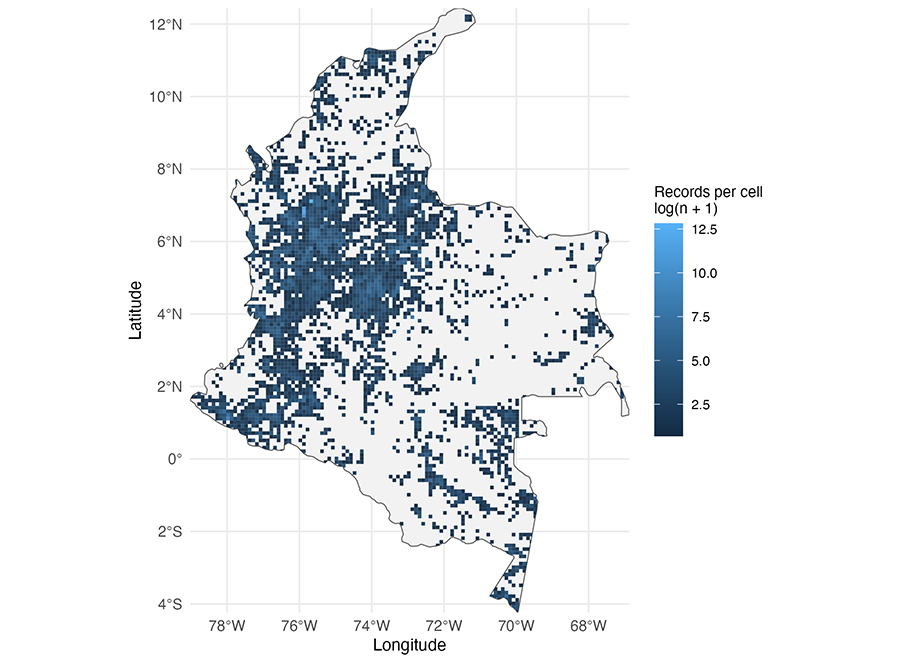
Figure 1. Spatial distribution of vascular epiphyte records in GBIF for
Colombia aggregated on a regular grid (cell size = 0.1°). Only cells with ≥1
record are displayed; blank areas indicate lack of records and should not be
interpreted as confirmed absences.
Figura 1. Distribución espacial de los registros de epífitas vasculares en
GBIF para Colombia agregados en una cuadrícula regular (tamaño de celda =
0,1°). Solo se muestran las celdas con ≥1 registro; las áreas en blanco indican
la falta de registros y no deben interpretarse como ausencias confirmadas.
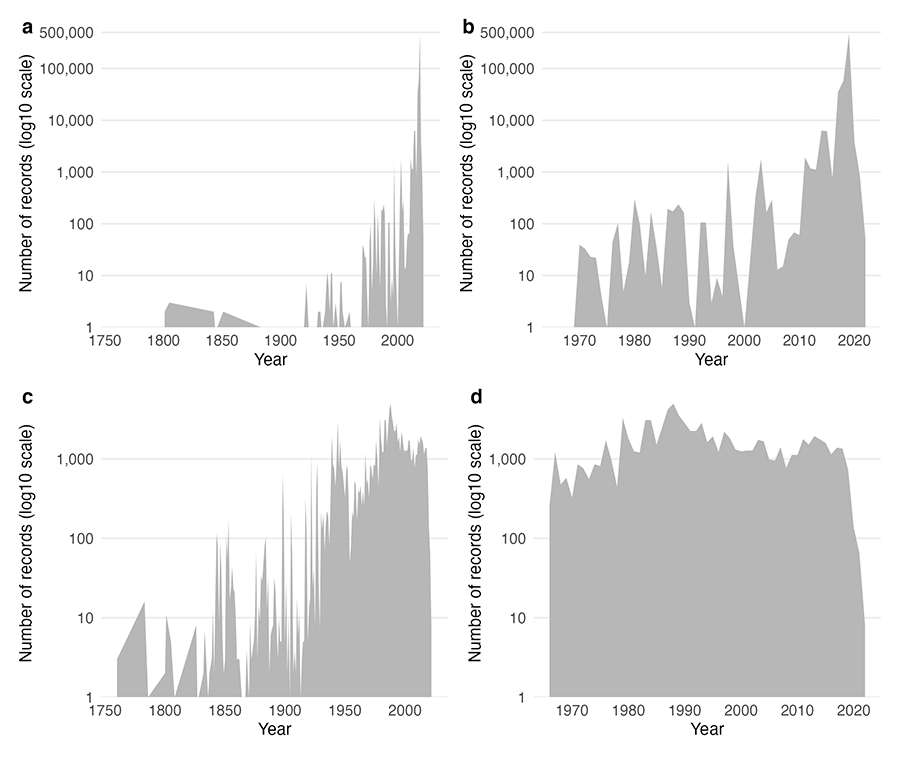
Figure 2. Temporal distribution of vascular epiphyte records in Colombia from
GBIF. (a) Observation
records from 1760 to 2022; (b) observation records from 1966 to 2022; (c) preserved specimen records from 1760
to 2022; and (d)
preserved specimen records from 1966 to 2022. The y-axis is shown on a log10
scale to improve visualization and allow comparison across record types with
strongly different magnitudes of annual records.
Figura
2. Distribución temporal de los registros de
epífitas vasculares en Colombia. (a) Registros de observación desde 1760 hasta 2023; (b) registros de observación desde 1966
hasta 2022; (c)
registros de especímenes conservados desde 1760 hasta 2023; y (d) registros de especímenes conservados
desde 1966 hasta 2022. El eje y se muestra en una escala logarítmica 10 para
mejorar la visualización y permitir la comparación entre tipos de registros con
magnitudes muy diferentes de registros anuales.
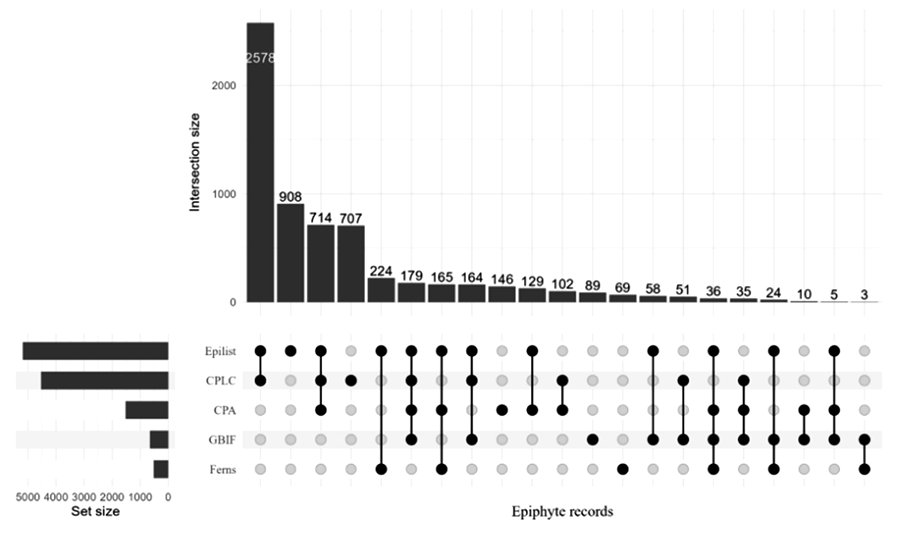
Figure 3. UpSet plot showing the intersection of
epiphyte species records among five sources used to compile the Colombian
checklist: EpiList 1.0 (EpiList), Catalogue of Plants and Lichens of Colombia
(CPLC), Catalogue of Plants of Antioquia (CPA), GBIF, and an unpublished list
of epiphytic ferns (Ferns). Vertical bars represent the number of species
shared among specific combinations of sources (indicated by filled circles
below), while horizontal bars represent the total number of species in each
source.
Figura 3. Gráfico UpSet que muestra la intersección de
especies de epífitas entre las cinco fuentes utilizadas para compilar el
listado de Colombia: EpiList 1.0 (EpiList), Catálogo de Plantas y Líquenes de
Colombia (CPLC), Catálogo de Plantas de Antioquia (CPA), GBIF y una lista
inédita de helechos epífitos (Ferns). Las barras verticales representan el
número de especies compartidas entre combinaciones específicas de fuentes
(indicadas por los círculos rellenos en la parte inferior), mientras que las
barras horizontales muestran el número total de especies en cada fuente.
Material and methods
Study area
These datasets compile
records from Colombia. Coordinates. -0.567 to 8.43° Latitude; -78.133 to
-69.896° Longitude.
Definition of Epiphytes
We adopted a broad definition of vascular
epiphytes, following Zotz (2013a, 2016), encompassing holo- and (primary) hemiepiphytes, as well as
“nomadic vines” (formerly denominated as secondary hemiepiphytes) such as
certain Araceae that maintain soil contact while climbing host trees (Zotz et al., 2021b). The classification of plants into epiphytic life forms is
debated, with various authors offering different criteria (Benzing, 1998;
Zotz, 2013a, b, 2016; Batke et al., 2016; Flores-Palacios,
2016). Zotz
(2013a,
2016) describes epiphytes as organisms that
germinate and root non-parasitically on other plants without soil contact for
at least part of their life cycle. The term may refer to individual plants or
entire species (Hoeber &
Zotz, 2022). In this sense, we adopt an inclusive
interpretation: in recent decades, botanists and herbarium collectors have
often applied “epiphyte” broadly to any plant growing on trees, without noting
whether it has lost ground contact (Zotz
2013b). This encompasses “nomadic vines” such as
some Araceae, which germinate on the forest floor and ascend host trees while
maintaining a continuous soil connection (Zotz et al., 2021b). We do not
distinguish between true, facultative, or accidental epiphytes due to
insufficient data on the proportion of terrestrial versus epiphytic individuals
for each species (Burns &
Zotz, 2010).
Compilation of the Epiphyte
Species List (SM1)
An Epiphyte Species List of Colombia (SM1)
was compiled using five primary sources. First, species classified under the
growth habits epiphyte and hemiepiphyte were extracted from two national
catalogs: the Catálogo de Plantas Vasculares del Departamento de Antioquia
(CPA) (Ortiz & Idárraga
Piedrahita, 2023) and the Catálogo de Plantas y
Líquenes de Colombia (CPLC) (Bernal
et al., 2016). In parallel, a list of epiphytic
ferns was contributed by the Ferns of Colombia research group. These three
sources were merged and cleaned to remove duplicate entries. We then
incorporated EpiList 1.0, a global checklist of vascular epiphytes (Zotz et al., 2021a), using the rgbif package in R (Chamberlain, 2017) to extract only
species recorded in Colombia. In addition, epiphyte species occurrence records
from the Global Biodiversity Information Facility (GBIF) were included. We
searched the GBIF database using the keywords “epiphyte” and “hemiepiphyte” in
both Spanish and English, removed duplicates, and validated species names. To
consolidate the final species list, all five sources were cross-referenced.
Taxonomic standardization and synonym resolution were performed using the
Leipzig Catalogue of Vascular Plants (LCVP) as the primary taxonomic backbone (Freiberg et al., 2020), accessed through the lcvplants R package for name matching.
Synonyms were removed using the lcvplants package in R (Freiberg et al., 2020). Endemic species at the country level were flagged based on the
CPA and CPLC. Growth habit data were extracted from the original databases,
catalogs, and supporting references.
The final species list integrates data from
the following sources:
Zotz, G., Weigelt, P., Kessler, M., Kreft, H.,
& Taylor, A. (2021a).
EpiList 1.0: A global
checklist of vascular epiphytes. Ecology, 102(6), e03326. https://doi.org/10.1002/ecy.3326
Bernal, R., Gradstein, S.R., & Celis, M.
(Eds.).
(2016). Catálogo de plantas y líquenes de
Colombia. Instituto de Ciencias Naturales, Universidad Nacional de
Colombia, Bogotá [Accessed: 27 December 2021]. http://catalogoplantasdecolombia.unal.edu.co/
Ortiz, R. del C. & Idárraga Piedrahita, A.
(2023). Catálogo de las Plantas Vasculares del Departamento de Antioquia.
Tropicos, Missouri Botanical Garden [Accessed: 6
October 2023]. http://www.tropicos.org/Project/Catalogo-de-Antioquia
Unpublished list of epiphytic ferns provided by
fern specialists Alejandra Vasco, Weston Testo, Michael Sundue, and Susana
Vega.
GBIF.org (06 September 2022). GBIF Occurrence
Download [Accessed: 06-09-2022] https://doi.org/10.15468/dl.rk4z6u
Compilation of the Occurrence
Dataset (SM2)
Finally, we retrieved records for each
species in Colombia using the rgbif package in R (Chamberlain, 2017), including both georeferenced and non-georeferenced occurrences.
All records associated with each species’ gbifID were downloaded using the
occ_download function. For SM2, we first described the process of consolidating
epiphyte species from each consulted source, followed by an overview of the
record composition—specifically, the number of entries derived from biological
collections, human observations, and other data sources. We cleaned this
downloaded database for consistency and technical errors, such as: (1)
incorrectly entered fields, (2) several names associated with the same entity
(verifying the accepted name), (3) state province and county mismatches, and
(4) coordinates not matching the locality.
Quality Control
For SM1 and SM2, evaluations of data
quality and filtering were carried out using a combination of QGIS 3.28 (QGIS.org, 2022), R
4.2.1 (R Core Team, 2022), OpenRefine 3.6.2 (OpenRefine Community, 2022), and
Microsoft Excel. Taxonomic data cleaning was performed using string
normalization routines in R and OpenRefine, which included the removal of
invisible Unicode characters, normalization of whitespace, and conversion to
plain ASCII text to ensure compatibility with external taxonomic services.
Duplicate records and inconsistent entries were filtered through OpenRefine’s
faceted browsing and clustering tools.
Taxonomic validation involved
cross-referencing species names against several authoritative sources. The
Leipzig Catalogue of Vascular Plants (LCVP) served as the primary taxonomic
backbone, accessed through the lcvplants R package (Freiberg et al., 2020) for synonym resolution and name standardization. Additional
verification was conducted using GBIF’s taxonomic backbone, the Catalogue of
Life, and World Flora Online through the rgbif and taxize packages in R,
particularly to detect mismatches or unresolved names. When automated matching
failed across these services, names were manually validated using authoritative
source URLs. Canonical names were harmonized for consistency across the final
dataset.
For SM2, geographic validation was
conducted using QGIS. Spatial filtering retained only those records with
coordinates falling within the political boundaries of Colombia. Administrative
fields such as department and municipality were cross-verified and corrected
using official reference shapefiles and attribute tables. Records without
coordinates were retained only if administrative-level locality information
(e.g., municipality, department) was complete and consistent. Both datasets
were subjected to manual review to correct anomalies in taxonomic hierarchy,
geographic descriptors, and identifier consistency, ensuring a curated and
reliable foundation for further analyses.
Data Integration
For SM1, all fields were formatted to
Darwin Core 4.1 standards, with required fields (e.g., taxonID, scientificName,
locality) and optional ecological descriptors (life form, endemic status).
Species were assigned to Colombia’s six natural regions (IAvH 2017) based
on occurrence distribution, and gaps were supplemented with verified localities
from SiB Colombia (Sistema de Información sobre Biodiversidad de Colombia).
Records and Data Availability and their
Use
The datasets are publicly available via the Global Biodiversity
Information Facility (GBIF) under open licenses and archived in stable
repositories to ensure long-term accessibility.
Epiphyte Species Checklist (SM1)
·
Data package title: Epiphyte Species List of
Colombia: Integrated Multiple Sources
·
Resource link: https://ipt.biodiversidad.co/sib/resource?r=jbm_lista_epifitas&v=1.0
·
Format: CSV and Darwin Core Archive (DwC-A)
·
License: Creative Commons Attribution 4.0
International (CC
BY 4.0)
·
Coverage: National (Colombia)
·
Temporal coverage: Derived from sources
published between 2016 and 2023
·
Taxonomic coverage: 6396 vascular epiphyte taxa
from 66 families
·
Epiphyte Occurrence Dataset (SM2)
·
Resource link https://zenodo.org/records/10070278
·
Data set name: Dataset of vascular epiphytes in
Colombia
·
Language: Spanish
·
Format: Darwin Core Archive (DwC-A), including
metadata in XML
·
License: Creative Commons
Attribution-NonCommercial 4.0 International (CC
BY-NC 4.0)
·
Coverage: National (Colombia), with
georeferenced and non-georeferenced records
·
Temporal coverage: 1863–2023
·
Taxonomic coverage: 5091 vascular epiphyte
species from 66 families
·
Format: CSV and Darwin Core Archive (DwC-A)
Technical Validation
The datasets underwent a multi-stage
validation process to ensure reliability and fitness-for-use. Taxonomic names
were cross-referenced with authoritative sources (GBIF Backbone Taxonomy, World
Flora Online, Catalogue of Life) to resolve synonyms and detect misspellings.
Records with unresolved names were flagged and retained only if verifiable
through expert review. Georeferenced records were validated by comparing
coordinates to declared locality fields. Records falling outside Colombian
boundaries or mismatched to their administrative divisions were corrected when
authoritative sources were available; otherwise, they were flagged and excluded
from spatial analyses. Non-georeferenced records were included only if
administrative locality data were complete and consistent.
Temporal validation included screening for
implausible collection dates (e.g., post-publication years or pre-1800
entries). Duplicates were identified through a combination of collector name,
collection number, and date, and were removed unless they represent distinct
voucher specimens.
Potential biases include overrepresentation
of Orchidaceae, concentration of records near major urban centers, and temporal
clustering of collections during specific expeditions. While these biases limit
certain analyses (e.g., unbiased richness estimation), they do not preclude
robust comparative studies or gap analyses when properly accounted for.
Limitations involve the inclusion of
occasional misidentified specimens, underrepresentation of canopy species that
are difficult to access, and variation in collection effort across regions.
These limitations are explicitly documented in the metadata to guide
appropriate reuse. We explicitly documented variation in spatial precision
across georeferenced records, which ranged from highly precise coordinates
(e.g., 1.608282, –77.887434; 5.17168, –75.98658) to coarse decimal entries with
reduced locational accuracy (e.g., 3.91, –73.08; 1.6, –75.650333). These
differences reflect historical changes in georeferencing practices, varying GPS
availability, and retroactive digitization of older specimens. Additional
limitations include uneven herbarium integrity, with some institutions
reporting specimens listed in digital catalogues that are no longer physically
present, reducing verification accuracy. Likewise, Antioquia’s strong
institutional capacity has led to disproportionate collecting and digitization,
making the Andean region better represented than Amazonian, Pacific, and
eastern Colombia. Finally, some taxonomic inconsistencies may persist,
particularly in dynamic groups such as Orchidaceae, because the LCVP backbone
does not always incorporate recent revisions.
The combination of automated validation
scripts, manual expert review, and transparent documentation ensures the
datasets meet high technical standards, making them suitable for conservation
planning, ecological modeling, and biogeographic research.
Authors' Contribution
Ana María Benavides contributed to the conceptualization and design of the study,
prepared the DwC standard for SM1, curated data, conducted analyses, and led
the writing of the original draft, as well as review and editing. Daihana
Arango performed material preparation, data collection, and curation for
SM2, carried out analyses, and contributed substantially to the writing of the
original draft and subsequent revisions. Maria Judith Carmona-Higuita
contributed to validation and manuscript review. Alejandra Vasco,
Weston Testo, Michael Sundue, and Susana Vega contributed to
data curation of the epiphytic fern list, validation, and review and editing of
the manuscript. All authors commented on and approved the final version of the
manuscript.
Financing, required permits, potential
conflicts of interest and acknowledgments
We thank Dubán Canal, Álvaro Idárraga,
Laura Clavijo, Amalia Diaz, Alejandro Zuluaga, Felipe Cardona, Julio Betancurt,
Dino Tuberquia, Yudy Gallego, Esteban Dominguez, Sebastián Vieira, Carolina
Castellanos-Castro, and Cristina López-Gallego, collaborators of the project
"GBIF, BID 2020: Data use for decision-making grant
(BID-CA2020-047-USE)", for their support and discussions around this
dataset. The Ferns of Colombia research group (listed as coauthors in this
paper) acknowledges the support of the National Science Foundation of the
United States (NSF, DEB-2045319, 2330409).
References
Batke, S., Cascante-Marín, A., &
Kelly, D. (2016). Epiphytes in Honduras: A geographical
analysis of the vascular epiphyte flora and its floristic affinities to other
Central American countries. Tropical Ecology, 57(1), 663–675.
Benzing, D. H. (1998). Vulnerabilities of tropical forests to climate
change: The significance of resident epiphytes. Climatic Change, 39,
519–540. https://doi.org/10.1023/A:1005312307709
Bernal, R., Gradstein, S. R., & Celis, M. (Eds.). (2016). Catálogo
de plantas y líquenes de Colombia. Instituto de Ciencias Naturales,
Universidad Nacional de Colombia [Accessed: 27 December 2021]. http://catalogoplantasdecolombia.unal.edu.co
Burns, K. C., & Zotz, G. (2010). A hierarchical framework for
investigating epiphyte assemblages: Networks, meta-communities, and scale. Ecology,
91(2), 377–385. https://doi.org/10.1890/08-2004.1
Chamberlain, S. (2017). rgbif: Interface to the Global “Biodiversity”
Information Facility “API” (R package version 0.9.8). CRAN. https://CRAN.R-project.org/package=rgbif
Fernández, F. (2011). The greatest impediment to the study of biodiversity in Colombia. Caldasia,
33(2), 2–5.
Flores-Palacios, A. (2016). Does structural parasitism by epiphytes exist? A case
study between Tillandsia recurvata and Parkinsonia praecox. Plant
Biology, 18(3), 463–470. https://doi.org/10.1111/plb.12406
Freiberg, M., Winter, M., Gentile, A., Zizka, A., Muellner-Riehl, A. N.,
Weigelt, A., & Wirth, C. (2020). LCVP, the Leipzig catalogue of vascular
plants: A new taxonomic reference list for all known vascular plants. Scientific Data, 7(1), 1–7. https://doi.org/10.1038/s41597-020-00702-z
GBIF.org (06 September 2022). GBIF Occurrence Download [Accessed 06/09/2022].
https://doi.org/10.15468/dl.rk4z6u
Hoeber, V., & Zotz, G. (2022). Accidental
epiphytes: Ecological insights and evolutionary implications. Ecological
Monographs, 92(4), e1527. https://doi.org/10.1002/ecm.1527
Instituto de Investigación de
Recursos Biológicos Alexander von Humboldt. (2017). Bio-regiones de
Colombia: Una propuesta para la planificación ambiental. Instituto
Humboldt. https://reporte.humboldt.org.co/biodiversidad/2017/
OpenRefine
Community. (2022). OpenRefine. https://openrefine.org/download.html
Ortiz, R. C. del, & Idárraga
Piedrahita, A. (2023). Catálogo de las plantas vasculares del departamento
de Antioquia. Tropicos, Missouri Botanical Garden [Accessed:
6 October 2023]. http://www.tropicos.org/Project/Catalogo-de-Antioquia
QGIS.org. (2022). QGIS Geographic Information
System (Versión 3.26.3). QGIS Association. http://www.qgis.org
R Core Team. (2022). R: A language and environment for statistical computing
(Versión 4.3.2). R Foundation for Statistical Computing. https://www.r-project.org/
Rangel-Ch., J. O. (2015). La
biodiversidad de Colombia: Significado y distribución regional. Revista de
la Academia Colombiana de Ciencias Exactas, Físicas y Naturales, 39(151),
176–200. https://doi.org/10.18257/raccefyn.136
Torres-Rodríguez, A. C.,
Binda, E., Ochoa Quintero, J. M., Garcia, H., Gómez, B., Soto, C., Martínez,
S., & Clerici, N. (2020). Answering the right questions:
Addressing biodiversity conservation in post-conflict Colombia. Environmental
Science & Policy, 104, 82–87. https://doi.org/10.1016/j.envsci.2019.11.012
Zotz, G. (2013a). The systematic distribution of vascular epiphytes: A
critical update. Botanical Journal of the Linnean Society, 171(3),
453–481. https://doi.org/10.1111/boj.12010
Zotz, G. (2013b). ‘Hemiepiphyte’: A confusing term and its history. Annals
of Botany, 111(6), 1015–1020. https://doi.org/10.1093/aob/mct085
Zotz, G. (2016). Plants on plants: The biology of vascular epiphytes.
Springer. https://doi.org/10.1007/978-3-319-39237-0
Zotz, G., Weigelt, P., Kessler, M., Kreft, H., & Taylor, A. (2021a).
EpiList 1.0: A global checklist of vascular epiphytes. Ecology, 102(6),
e03326. https://doi.org/10.1002/ecy.3326
Zotz, G., Almeda, F., Arias, S.,
Hammel, B., & Pansarin, E. (2021b). Do secondary
hemiepiphytes exist? Journal of Tropical Ecology, 37(6): 286–290. https://doi.org/10.1017/S0266467421000407